Hydroseeding
- Large areas and slopes
- Fast cover
- Works on stripped subsoil
- Free estimates
Get a free estimate
Tell us where the job is and we’ll get you a local quote.
By submitting this form you agree that Hydroseeding VA may share the details you provide with one or more independent local contractors, and that they and we may contact you by phone, text or email about your enquiry — including by automated dialling or prerecorded message. Consent is not a condition of any purchase and you can withdraw it at any time by replying STOP or telling the caller. Message and data rates may apply. See our privacy policy and terms.
Why slurry rather than a spreader
A spreader drops seed on the surface and hopes. On a slope, or on the dense clay subsoil left behind after grading, the first heavy rain moves most of it to the bottom of the hill — and you find out six weeks later when the stand comes up in stripes.
Hydroseeding mixes seed with wood or paper mulch, fertiliser and a tackifier, then sprays the lot as a single wet layer. The mulch holds moisture against the seed and the tackifier glues the whole mat to the ground. That is the entire argument, and it is why it is the default for anything steep, large, or freshly graded.
It is not magic. Seeded outside the window, into frozen ground, or onto clay compacted hard by construction traffic, it fails like anything else would.
Rates written into the county specs
These are not marketing figures. They come out of the seeding specifications local authorities write their approvals around.
| Situation | Rate | Mix |
|---|---|---|
| Minimum-care lawn | 175–200 lb/acre | 95–100% Kentucky 31 or turf-type tall fescue |
| High-maintenance lawn | 200–250 lb/acre | — |
| Slope 3:1 or flatter | 150 lb/acre | 128 lb KY-31 + 2 lb redtop + 20 lb nurse crop |
| Slope steeper than 3:1 | 150 lb/acre + 20 lb | Add crown vetch |
Why it wins on most Virginia lots
Cheaper than sod, faster on site, and it holds on ground sod cannot. The bigger the area, the wider the gap.
A fraction of sod
Per square foot, hydroseeding comes in well below sod, and the gap widens the bigger the area. On a full lot that difference is thousands.
One pass, usually one day
Seed, mulch, fertiliser and tackifier go down together. Most residential jobs are sprayed and finished the same day.
Grown in place
Roots develop where they are rather than being cut and relaid, so an established hydroseeded stand generally outlasts sod on the same ground.
Anywhere a hose reaches
Tackifier holds the slurry to gradients where sod creeps and hand seed washes away. Banks, cuts and ditch lines included.
Matched to the site
Blends chosen for your soil, light and slope rather than whatever the sod farm happened to be growing.
We quote every month
There is a best window and the crew will tell you what it is for your site, but there is useful work to do in every month of the year.
Start to finish
No surprises in the middle.
You tell us the area and the ground
Square footage, rough slope, and whether the topsoil is still there or the lot has been stripped. That last one changes the mix more than anything else.
We quote the mix, not just the acreage
Seed type, mulch rate, tackifier, and whether the site needs amendment or imported topsoil to stand a chance. A cheap quote that skips the amendment is a quote to do it twice.
Ground prep
Compacted clay gets broken up. Without that the slurry sits on a hard pan and the roots have nowhere to go.
Application
Sprayed in one pass, usually the same day. You will see the mulch colour straight away; that is dye, not growth.
Watering and the first three weeks
This is where stands succeed or fail, and it is mostly on you. We will tell you exactly what it needs rather than leaving and hoping.
Recent work
Across the Richmond metro.
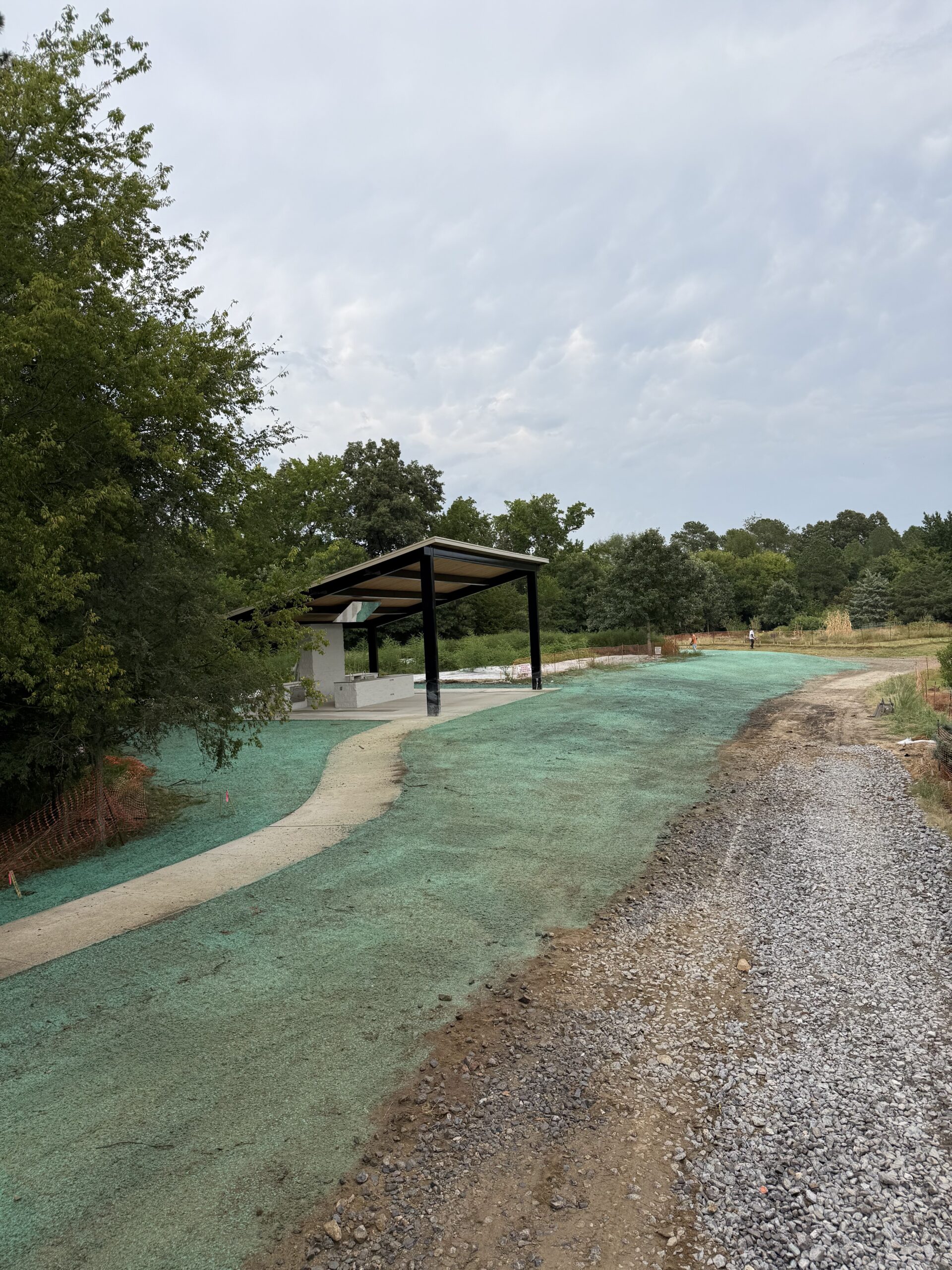
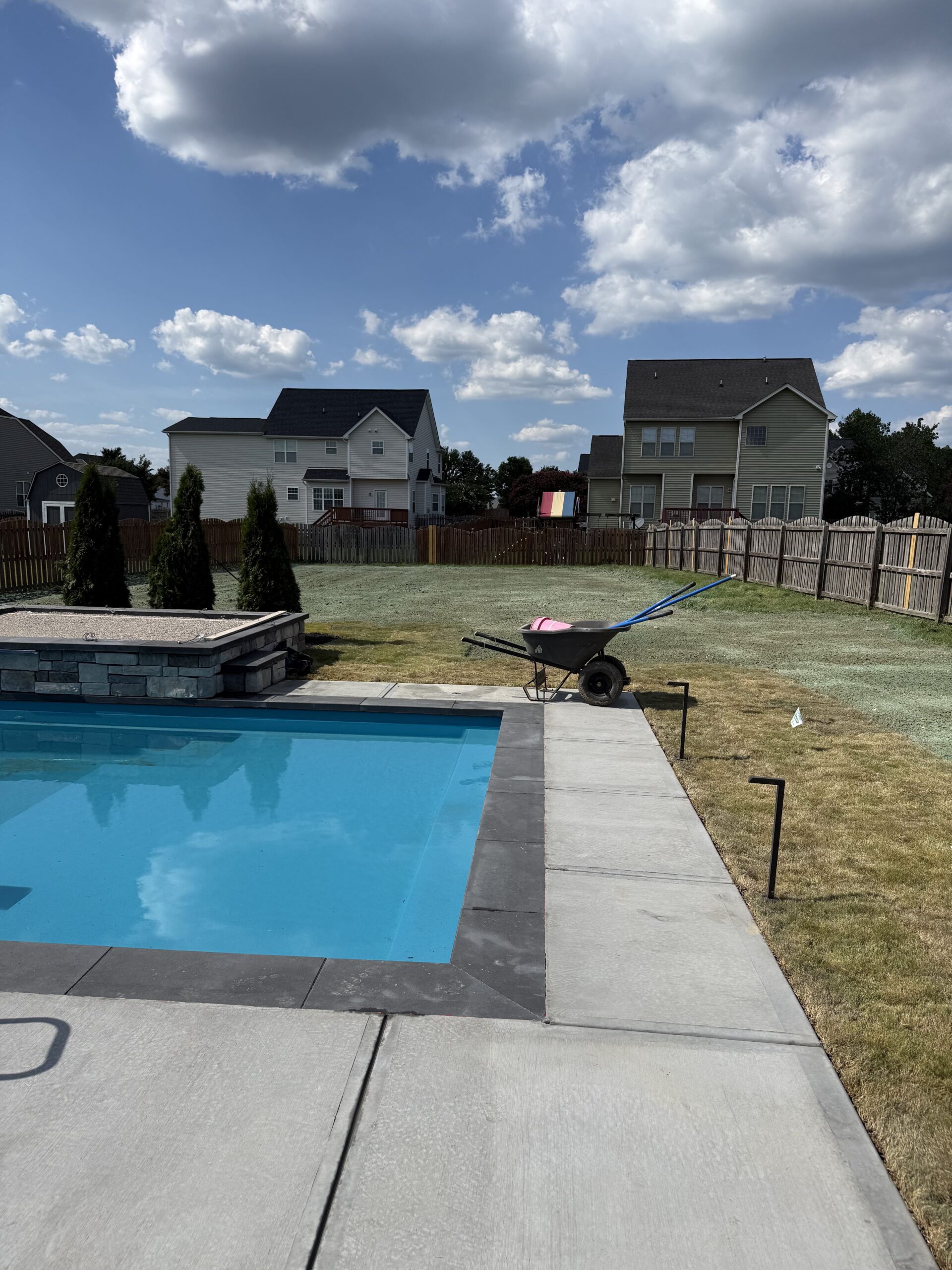
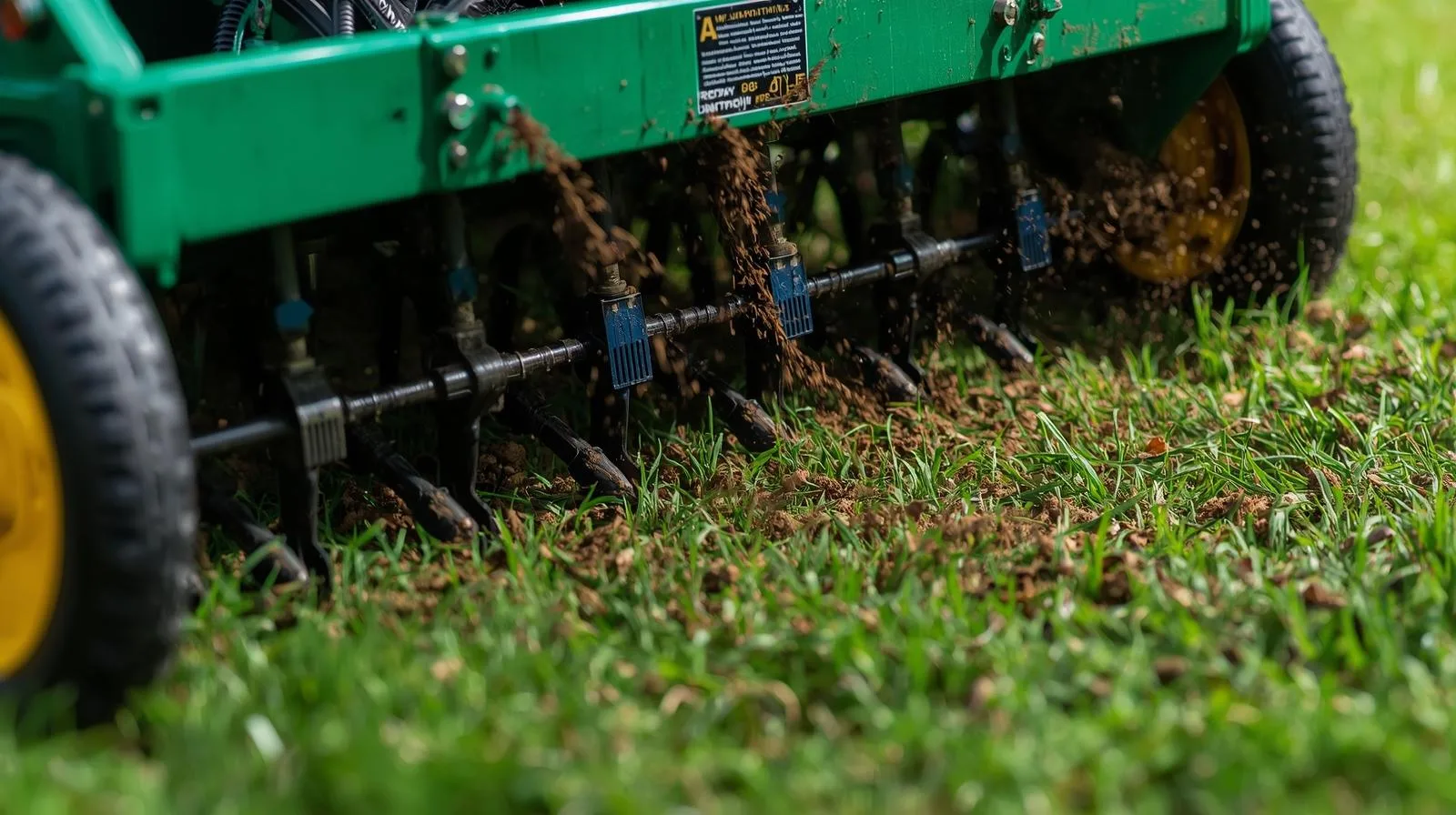
Bare ground to established lawn
Drag the handle. Same ground, one growing season apart.
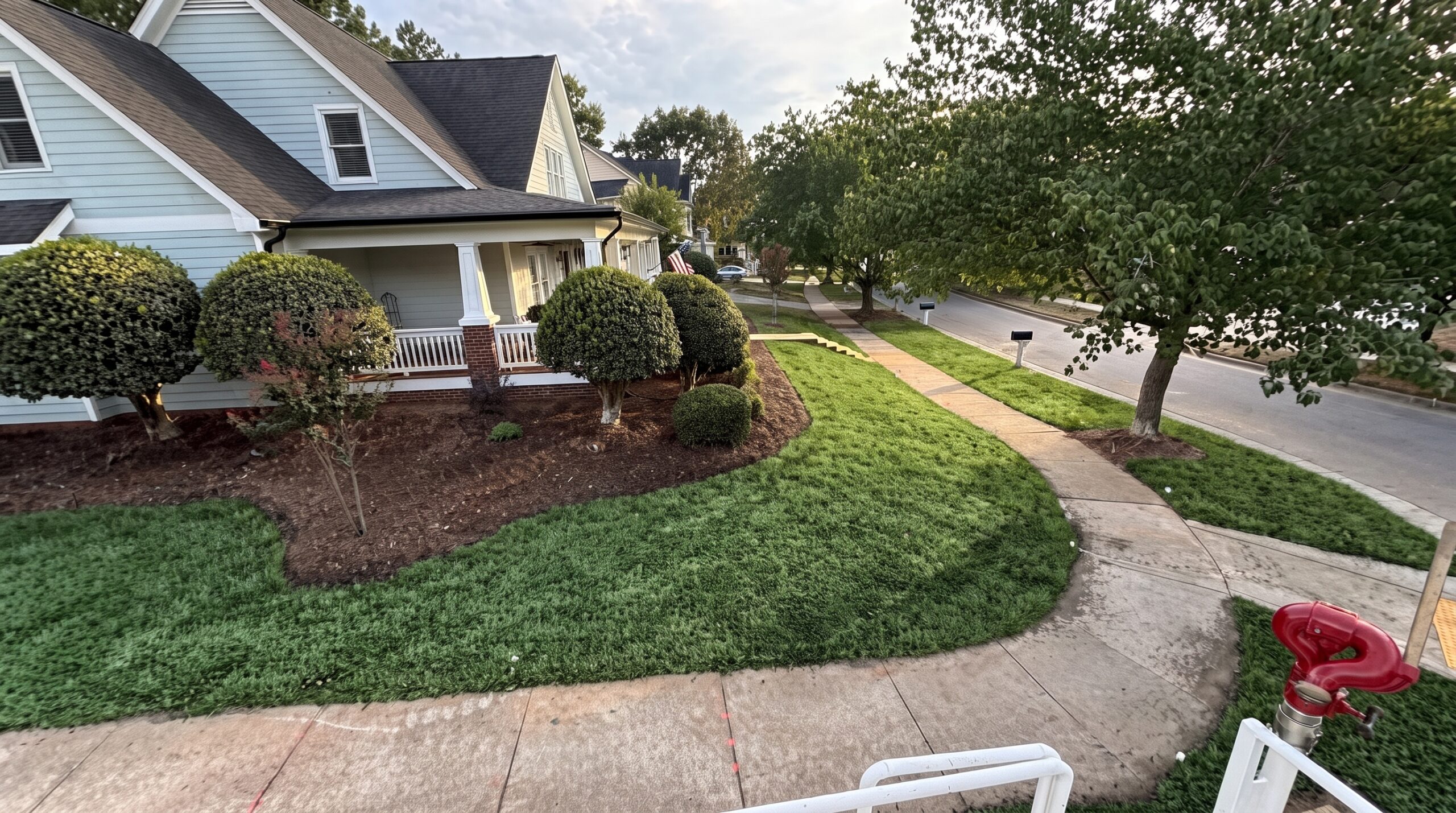
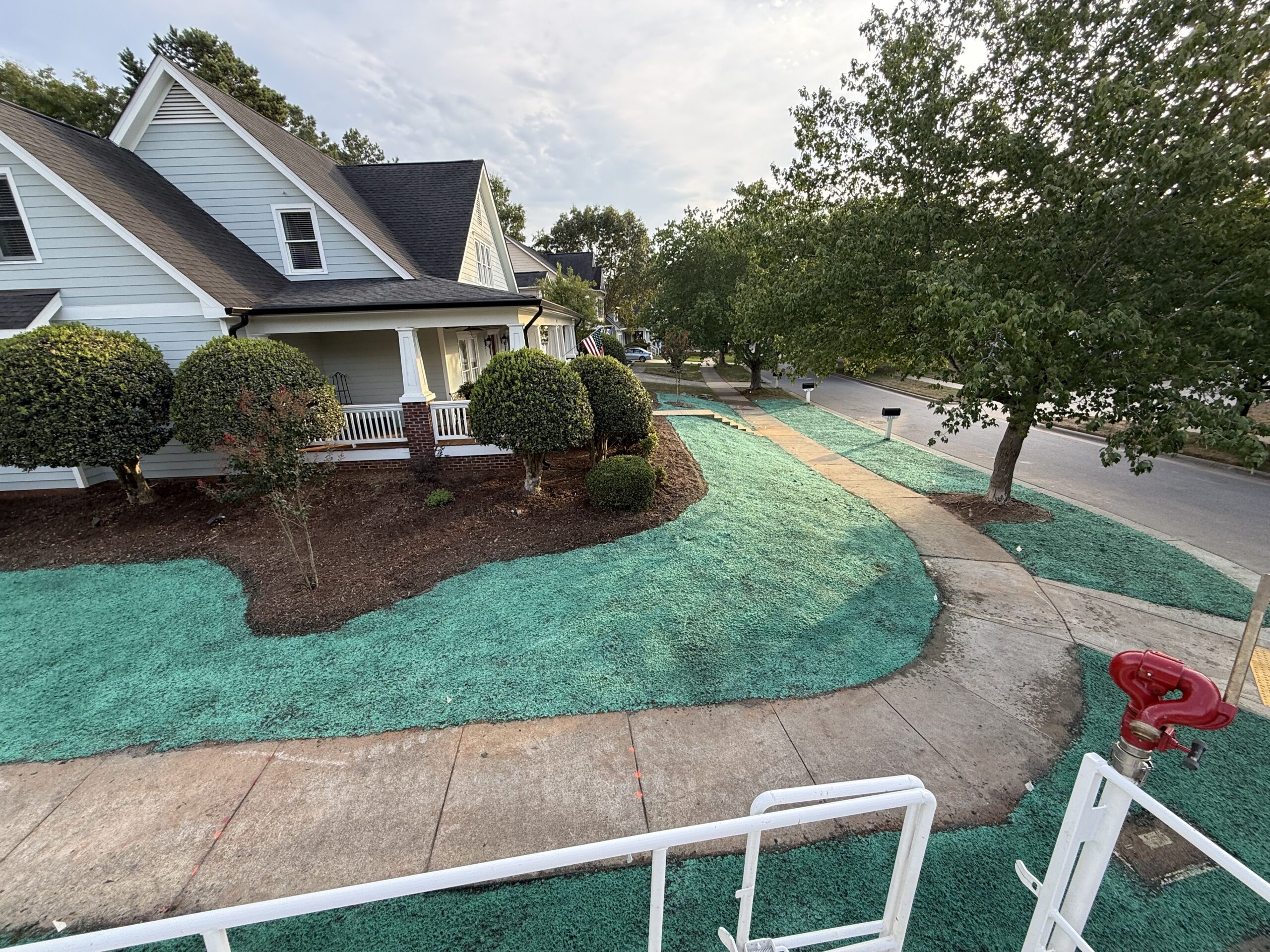 BeforeAfter — one season
Hydroseeding vs sod vs hand seeding
What actually differs between the three.
| Hydroseeding | Sod | Hand seeding | |
|---|---|---|---|
| Cost per sq ft | $0.12 – $0.35 | Several times higher | Lowest, least reliable |
| Holding on clay | Tackifier grips the slurry to a slick, low-infiltration surface | Rolls creep on clay before roots take | Seed washes to the bottom of the slope |
| Slopes and banks | Sprays anywhere a hose reaches | Slips before rooting; needs pinning | Washes out in the first heavy rain |
| Stripped subsoil | Amendment goes in as part of the same operation | Sits like a rug on unprepared clay | Rarely establishes at all |
| Grass choice | Any blend, matched to soil and light | Whatever the farm grew | Any blend |
| Usable lawn | One growing season | 2–3 weeks | One to two seasons, patchy |
Common questions
How soon will I see green?
Usually seven to fourteen days in the right window, with full establishment over a couple of months. Autumn seeding greens up more slowly than spring but roots far better, which is why it is the preferred window.
How soon can you start?
Quotes usually go out the same day, and most residential jobs book within a couple of weeks. If you are working to a builder’s schedule or a closing date, say so when you call and we will work to it.
Do I need to water it?
Yes, and it is the single biggest factor in whether it takes. Light and frequent for the first two to three weeks — you are keeping the mulch mat damp, not soaking the soil. A stand that dries out at day five does not recover.
Is it cheaper than sod?
Per square foot, substantially. Sod is faster and instant, which matters if you are selling. We wrote a straight comparison rather than pretending one always wins — see the hydroseeding vs sod page.
What does it cost against sod?
Substantially less per square foot, and the gap widens the bigger the job. On a full lot the difference runs to thousands. The estimate is free, so the cheapest way to find out is to ask.
Will it work on my slope?
Usually, and slopes are where it earns its money. Steeper than 3:1 the mix changes — the county specs add crown vetch — and above a certain gradient you want blankets or matting over the top rather than slurry alone.
What if the lot has been stripped to clay?
Common after grading, and it needs handling. Dense clay subsoil is a poor seedbed: low infiltration, no organic matter, and compacted by whatever drove over it. Expect to amend, and in some cases to import topsoil or compost. Skipping that is the usual reason a stand comes in thin.
Get a quote
Tell us the site, the size and roughly when. We’ll come back with a local price.
Ready when you are
Tell us what the site needs and roughly how big it is. We’ll match you with a crew that works your county and get you a written price.
- Call
- (757) 936-8185
- hydroseedingva@gmail.com
- Where we work
- Richmond city, Henrico, Chesterfield, Hanover, Goochland, Powhatan and New Kent
Get a free estimate
Tell us where the job is and we’ll get you a local quote.
By submitting this form you agree that Hydroseeding VA may share the details you provide with one or more independent local contractors, and that they and we may contact you by phone, text or email about your enquiry — including by automated dialling or prerecorded message. Consent is not a condition of any purchase and you can withdraw it at any time by replying STOP or telling the caller. Message and data rates may apply. See our privacy policy and terms.