Hydroseeding and erosion control in Petersburg
- Free estimates
- Local crews
- Erosion control and seeding
- 2 permit trigger
Get a free estimate
Tell us where the job is and we’ll get you a local quote.
By submitting this form you agree that Hydroseeding VA may share the details you provide with one or more independent local contractors, and that they and we may contact you by phone, text or email about your enquiry — including by automated dialling or prerecorded message. Consent is not a condition of any purchase and you can withdraw it at any time by replying STOP or telling the caller. Message and data rates may apply. See our privacy policy and terms.
What triggers a permit in Petersburg
Erosion control gets treated as a commercial-site problem because the federal threshold is a full acre. In Virginia it is nothing like that, and in this part of the state it is smaller again.
| Rule | Disturbance that triggers it | Note |
|---|---|---|
| Federal (EPA NPDES) | 1 acre | The number most people have heard |
| Virginia, general | 10,000 sq ft | Four times stricter than federal |
| Virginia, inside a CBPA | 2,500 sq ft | Tidewater localities only, and only inside a mapped area |
| Petersburg | 2,500 sq ft inside a mapped CBPA, 10,000 sq ft elsewhere (state minimum) | Statutory minimum — confirm with the locality |
What's different about Petersburg
Three things worth knowing before you get quotes.
Clearing trees can require the permit by itself
Petersburg's erosion and sediment control article states that removing or clearing trees from land zoned commercial, industrial or residential requires approval of a land disturbance permit — with no square footage attached, and only selective removal of dead or diseased trees excepted. Nowhere else in the metro reads quite like that. It is worth confirming against the current code, because our copy of that section is an abstract rather than the live text.
The fall line runs through the city
USGS places the fall line through Petersburg, closely following the route of I-95, and names the Pennsylvanian-Permian Petersburg Granite under the Piedmont side. East of the line you are on unconsolidated Coastal Plain terraces instead. Same city, two different problems: runoff and suspended fines on one side, droughty sand on the other.
The river below you is the Bay's worst sediment trend
USGS reported in 2025 that the Appomattox has seen a 39 percent increase in sediment since 2015, the largest percentage increase of any waterway feeding the Chesapeake Bay. The same report describes two 100-year storms hitting Petersburg in a single week in July 2025, with up to eight inches of rain on 15 July and more than twenty road closures. Bare ground here is a measured problem, not a theoretical one.
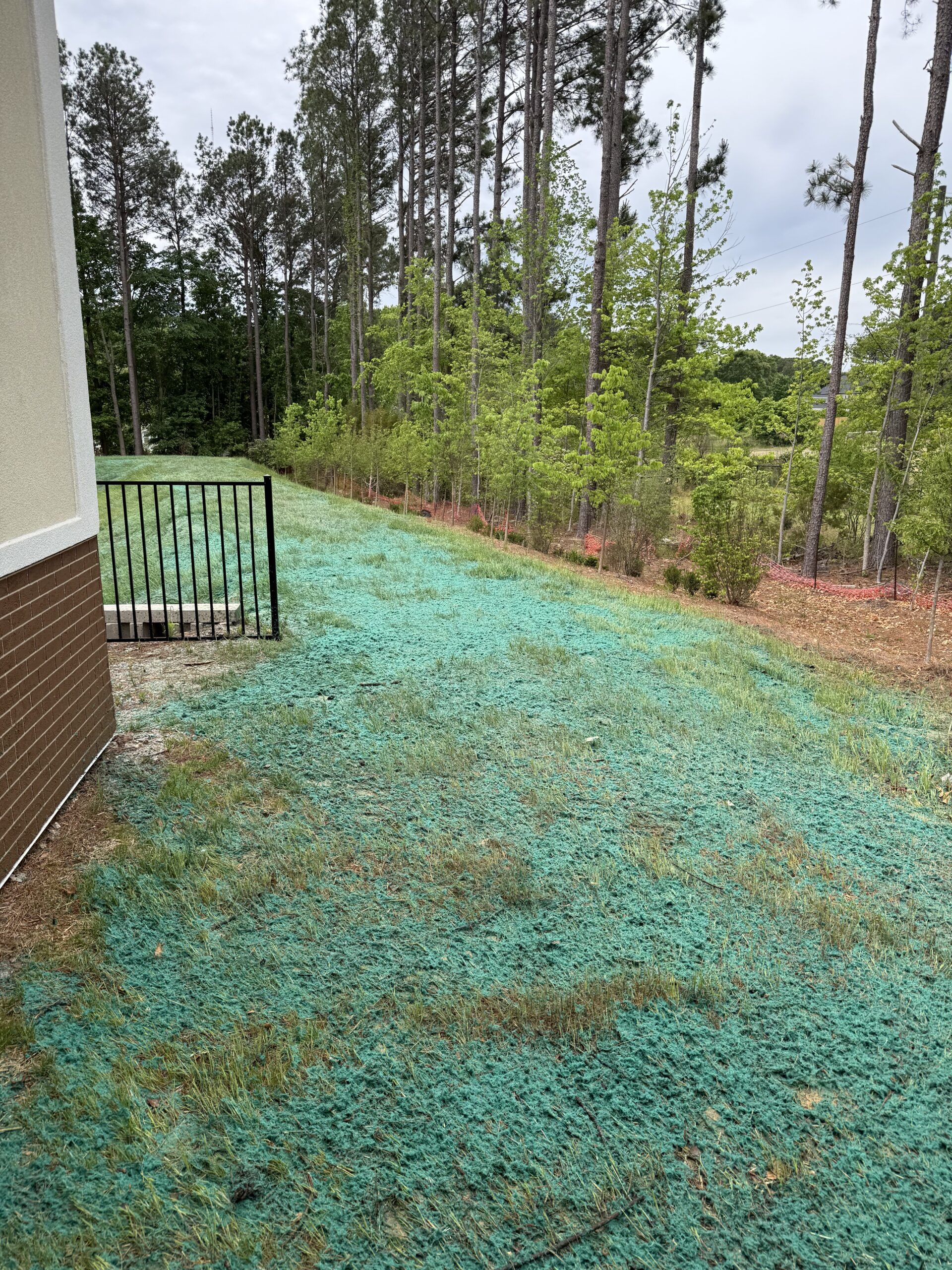
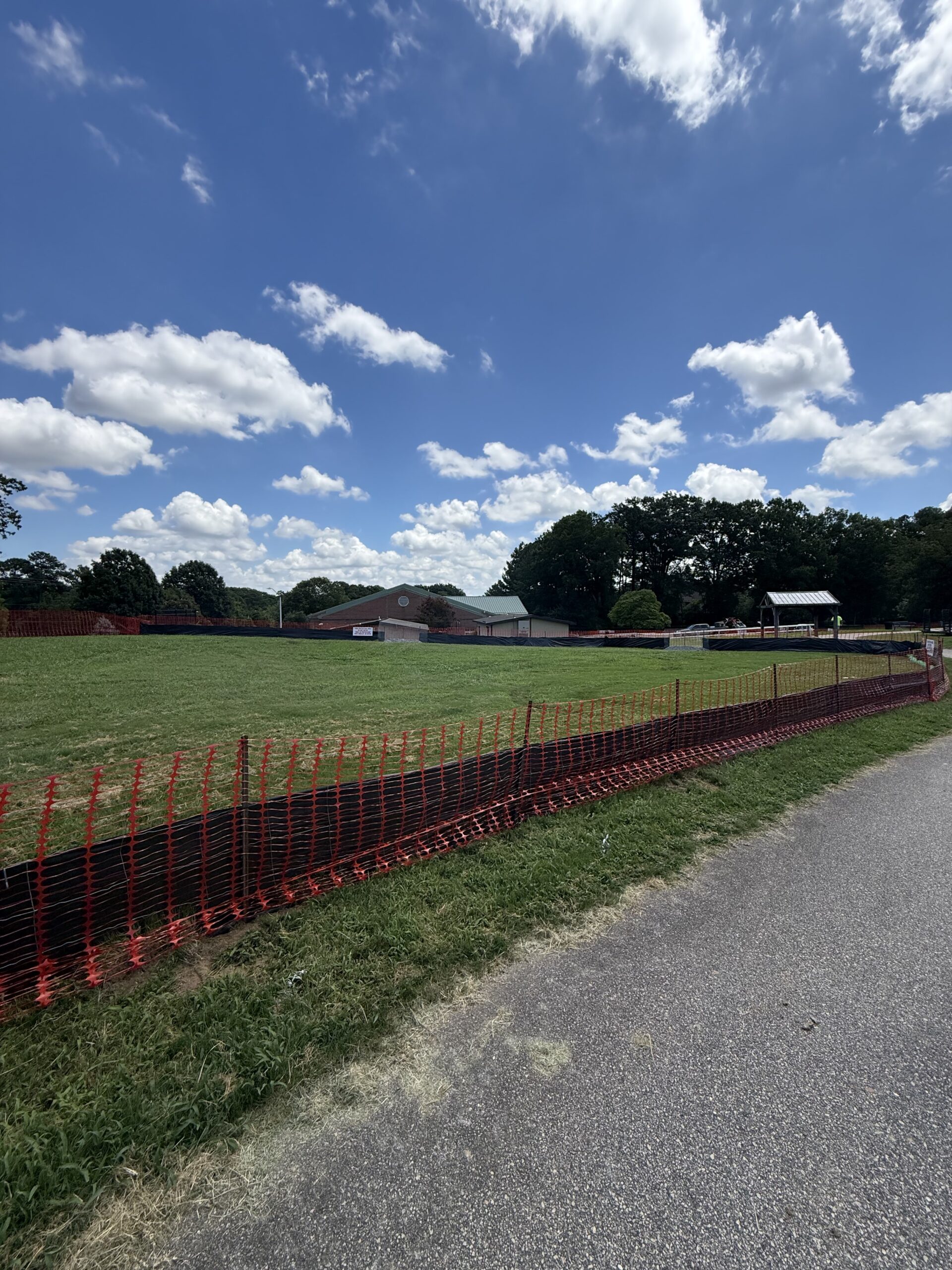
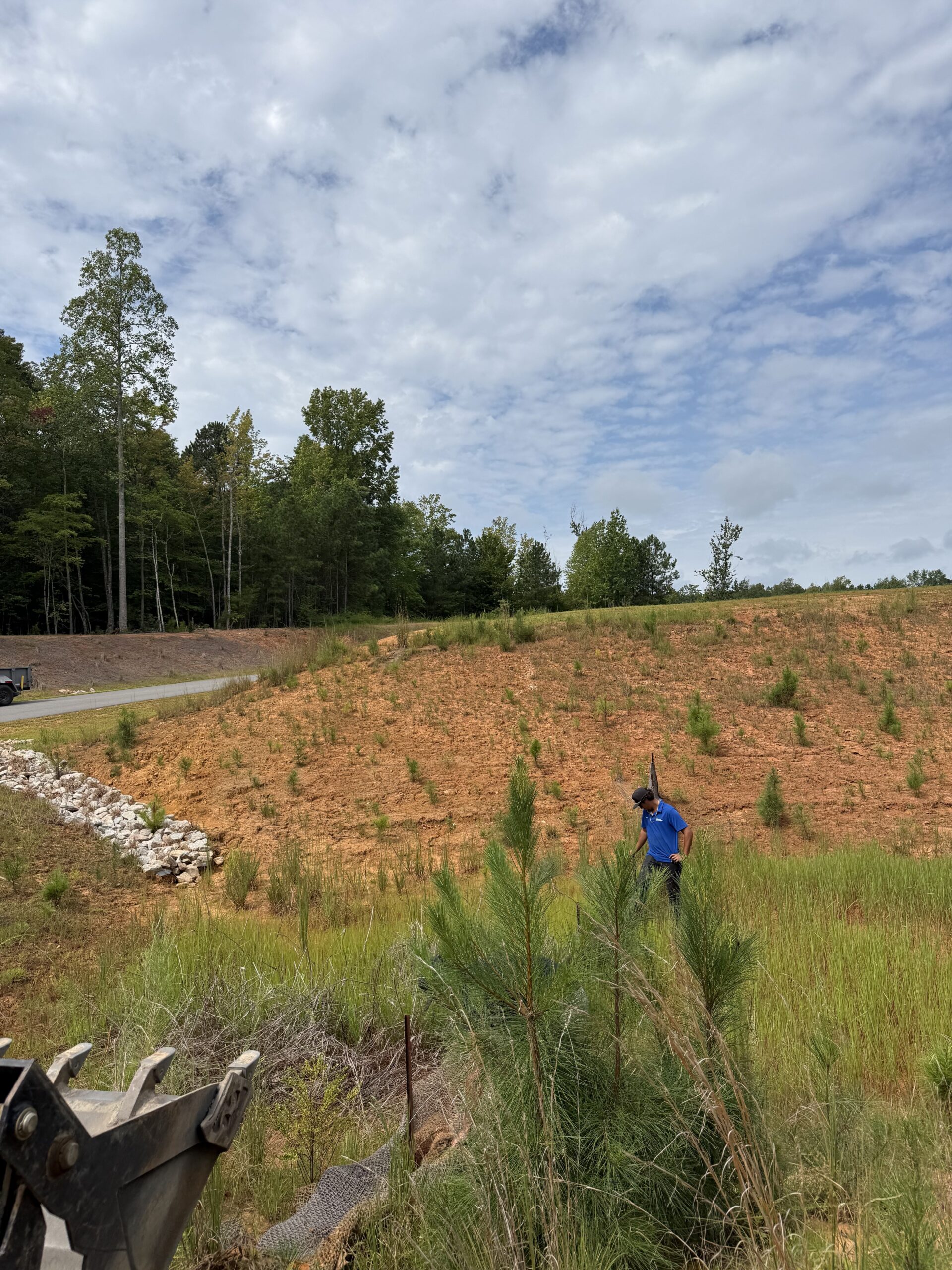
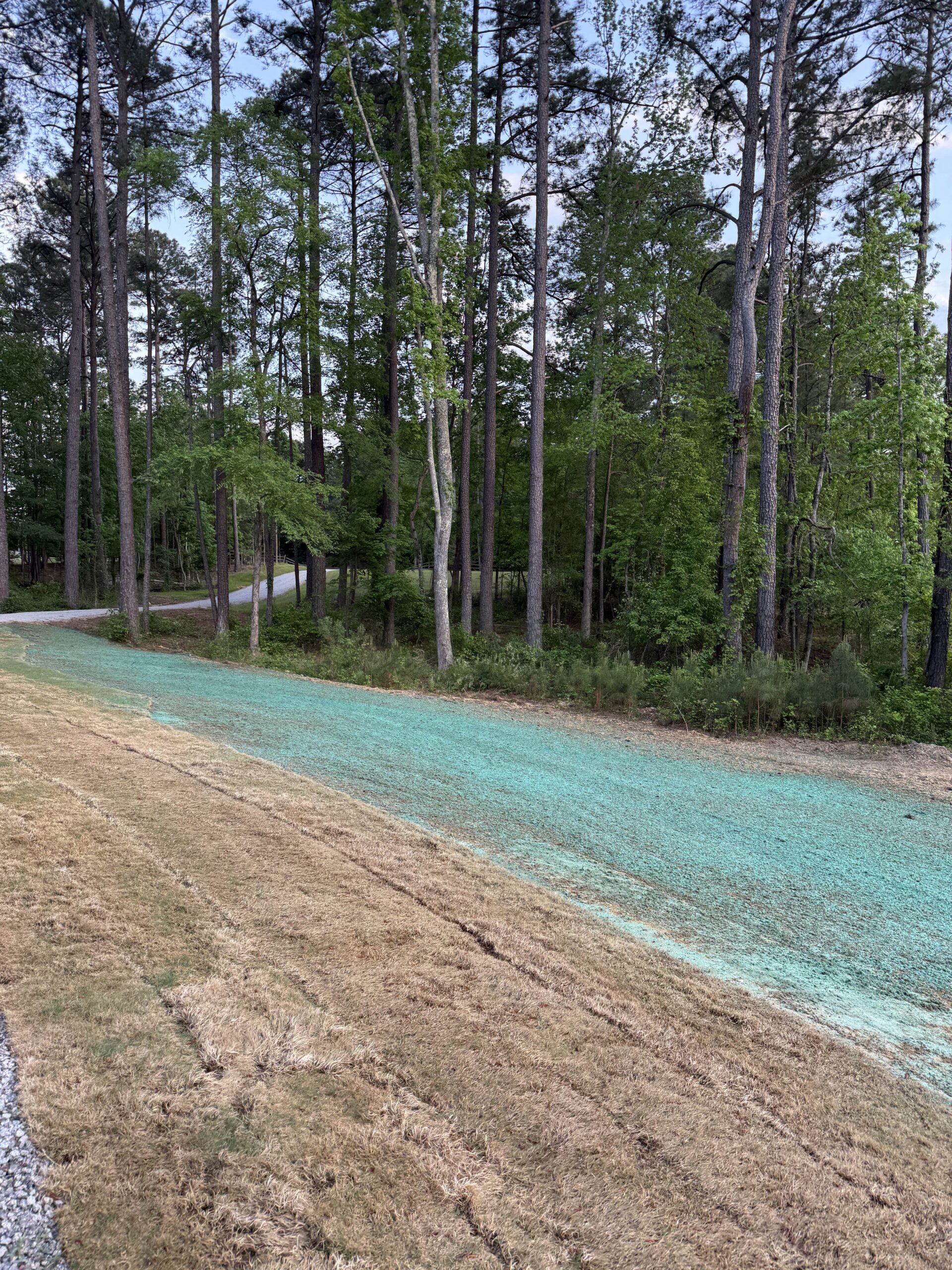
Recent work in Petersburg
Builder lots stripped to clay, banks that keep sliding, and lawns that came in patchy the first time.
Two seedbeds in one city, and a tree rule nobody expects
The US Geological Survey names Petersburg as a fall line city, alongside Richmond, Fredericksburg, Alexandria and Emporia, and puts the line itself close to the route of I-95. West of it you are above the Pennsylvanian–Permian Petersburg Granite, on Piedmont ground: low infiltration, fast runoff, and fines that stay suspended long enough to pass straight through a silt fence. East of it the ground becomes unconsolidated Coastal Plain terrace, sandier and droughty, where the failure mode is the seed drying out before it germinates. One city, two problems, two specifications — and a quote that offers the same mulch rate on both sides has not been to the site.
Petersburg also has a provision we have not found anywhere else in the metro. Its erosion and sediment control article states that removing or clearing trees from land zoned commercial, industrial or residential requires approval of a land disturbance permit, with no square footage threshold attached and only selective removal of dead or diseased trees excepted. Our copy of that section is an abstract taken in 2016 rather than the live code, so confirm it before you rely on it — but it is unusual enough that treating a clearing job as automatically unregulated would be a mistake here.
The buffer rule runs the other way from Chesterfield’s. Where Chesterfield publishes plant counts per 400 square feet, Petersburg sets a performance standard: vegetation removed from the 100-foot buffer must be replaced with vegetation equally effective at retarding runoff, preventing erosion and filtering nonpoint source pollution. More flexible, but much harder to cost from a table — which is a reason to get the restoration specified in writing before anything is cleared rather than after someone has already started.
Bare ground to established lawn
Drag the handle. Stripped Piedmont clay on the left, one growing season later on the right.
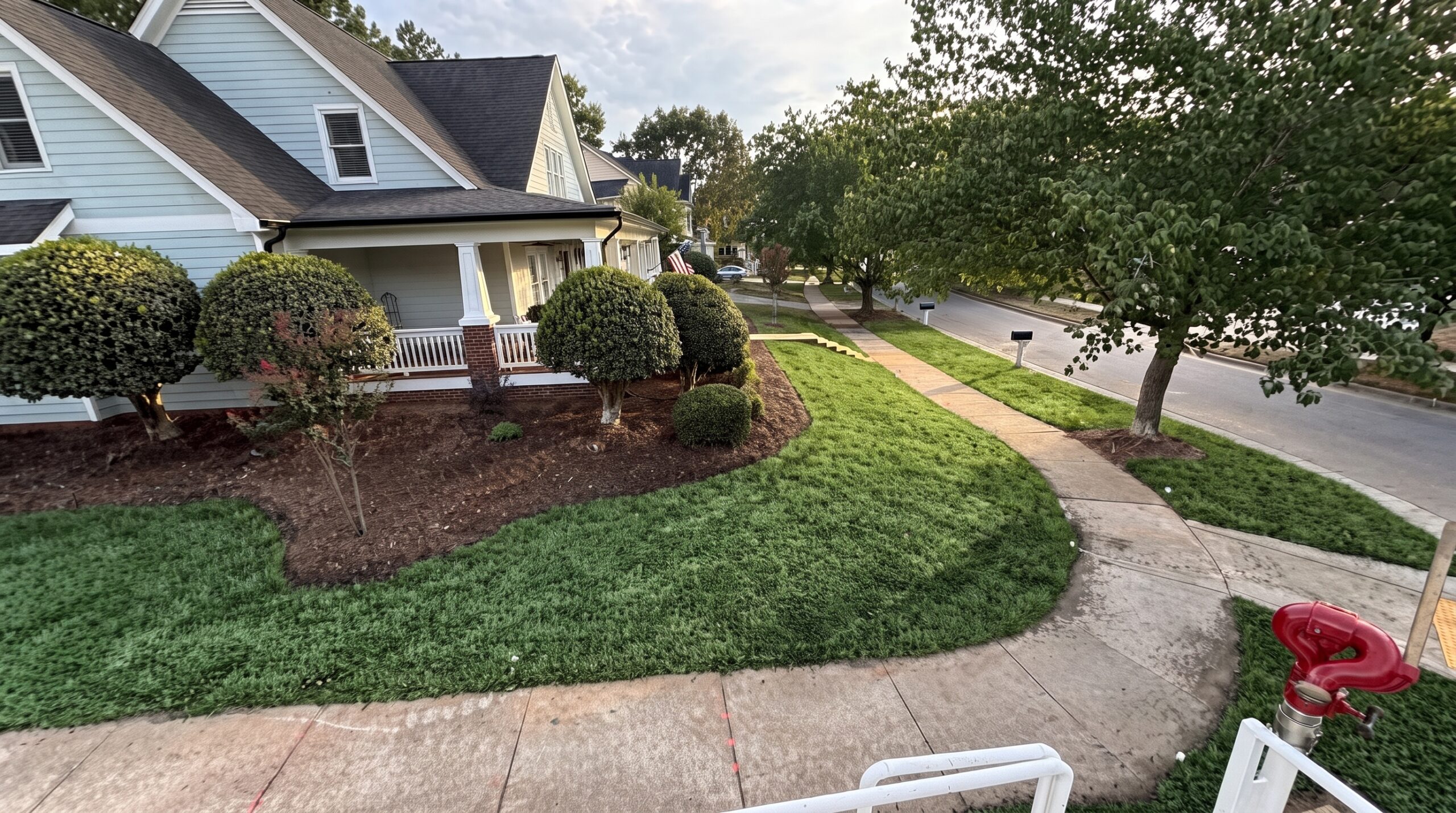
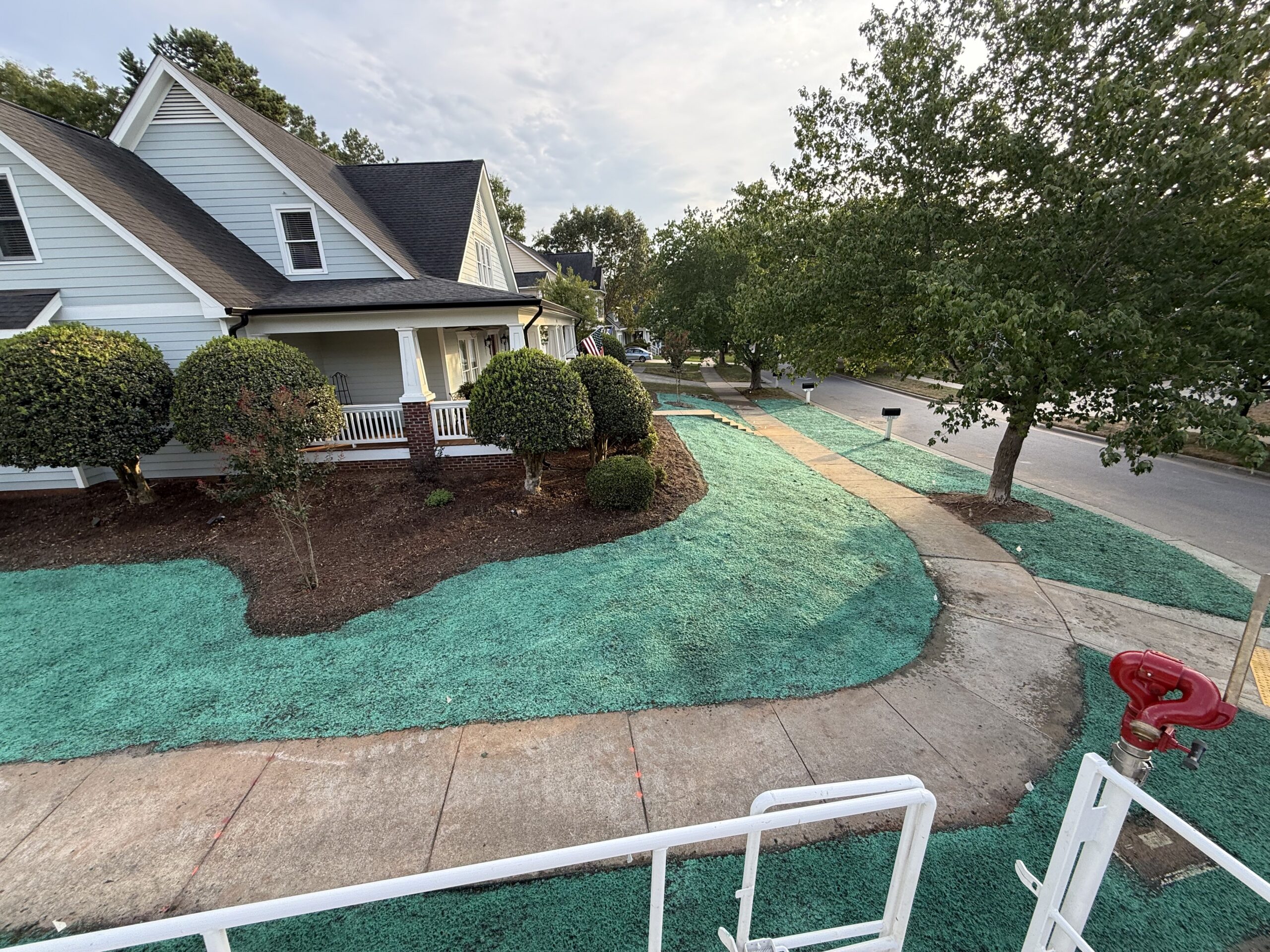 BeforeAfter — one season
Hydroseeding vs sod vs hand seeding
On clay the difference is whether the seed stays where you put it.
| Hydroseeding | Sod | Hand seeding | |
|---|---|---|---|
| Cost per sq ft | $0.20 – $0.45 | 3 to 5 times higher | Cheapest up front, most likely to need doing twice |
| Holding on clay | Tackifier grips the slurry to a slick, low-infiltration surface | Rolls creep on clay before roots take | Seed washes to the bottom of the slope |
| Slopes and banks | Sprays anywhere a hose reaches | Slips before rooting; needs pinning | Washes out in the first heavy rain |
| Stripped subsoil | Amendment goes in as part of the same operation | Sits like a rug on unprepared clay | Rarely establishes at all |
| Grass choice | Any blend, matched to soil and light | Whatever the farm grew | Any blend |
| Usable lawn in | One growing season | 2–3 weeks | One to two seasons, patchy |
From tank to turf
Spray day in Petersburg, the fortnight after, and the result a season on.
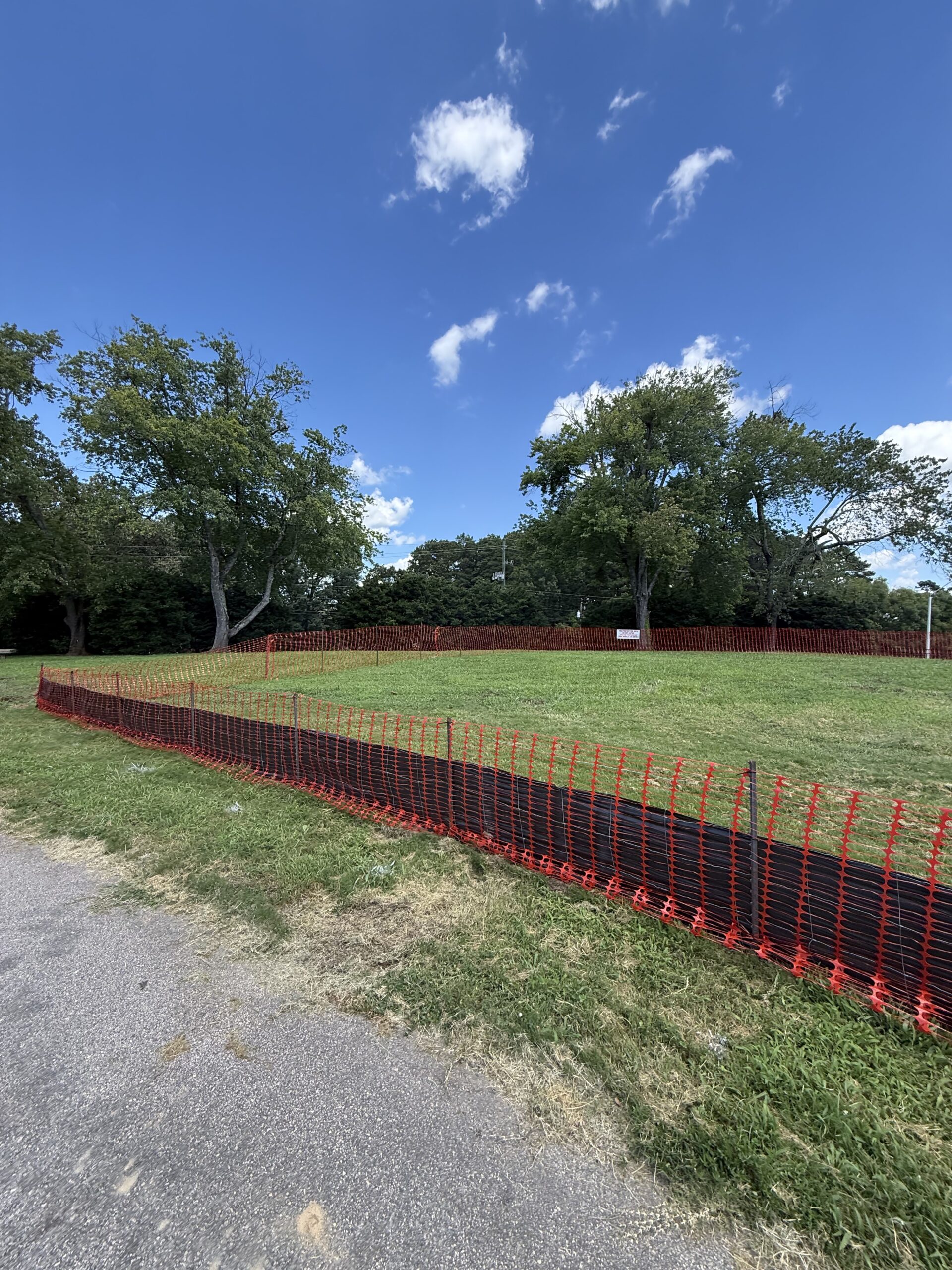
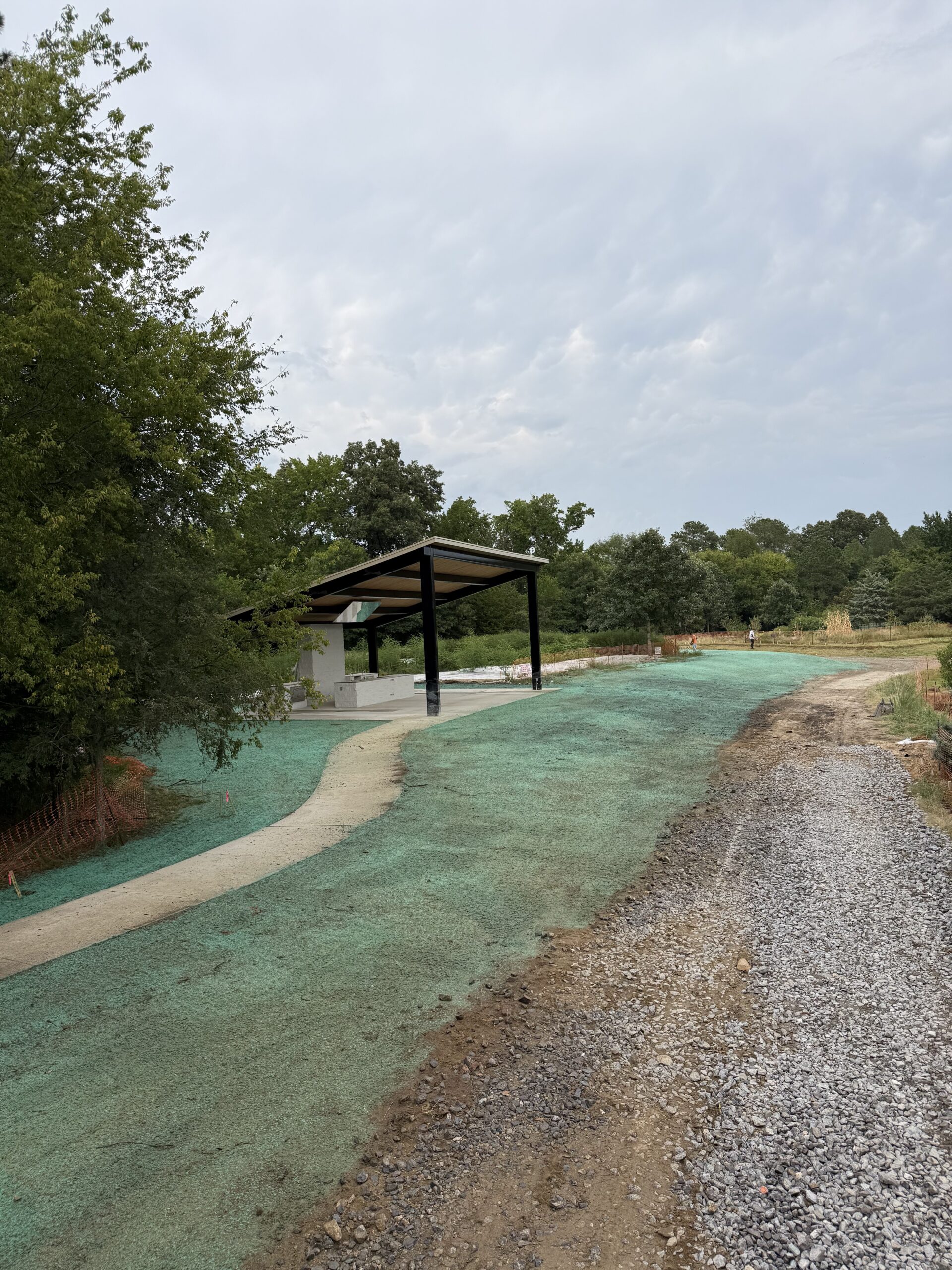
The paperwork in Petersburg
| Item | Detail |
|---|---|
| Permit | Land Disturbance Permit — City Code Chapter 50, Article V |
| Administered by | City of Petersburg; the Chesapeake Bay programme sits at Chapter 122, Article II |
| Chesapeake Bay Preservation Area | Yes — mapped areas only |
| Ground | On the fall line — Piedmont granite west, Coastal Plain sediments east |
| RPA buffer | 100 ft vegetated buffer where mapped |
Work we cover in Petersburg
Clay ground changes what works. Tell us which you need and we’ll get you a local price.
Petersburg questions
Is it true that cutting down trees needs a permit here?
That is what the city’s erosion and sediment control article says: removing or clearing trees from land zoned commercial, industrial or residential requires approval of a land disturbance permit, with no square footage attached and only selective removal of dead or diseased trees excepted. We are working from a 2016 abstract of the code rather than the live text, so confirm it with the city — but it is unusual enough that you should not assume a clearing job is unregulated.
What does being on the fall line actually change?
It gives you two seedbeds in one city. USGS names Petersburg as a fall line city and puts the Petersburg Granite under the Piedmont side; east of the line you are on unconsolidated Coastal Plain terraces. West of the line the enemy is runoff and suspended fines, so tackifier, blankets and fast cover do the work. East of it the enemy is the seed drying out, so mulch rate and watering matter more. A quote that specifies the same thing on both sides has not looked at the ground.
Does Petersburg have a planting standard like Chesterfield’s?
Not a numeric one. Chesterfield publishes counts per 400 square feet. Petersburg’s buffer provision is a performance standard — where trees are removed they must be replaced with vegetation “equally effective in retarding runoff, preventing erosion, and filtering nonpoint source pollution.” That is more flexible and harder to cost from a table, which is a reason to get the restoration specified before work starts rather than after.
Is a contractor licence the same as an RLD certificate?
No, and ask for both. DPOR licenses the business — Class A, B or C by job value, under the Landscape Service Contracting specialty. The Responsible Land Disturber certificate covers an individual for erosion control compliance. A company doing this properly holds both.
Hydroseeding near you in Petersburg
Places we quote in Petersburg. If your address is inside the city, we cover it.
- Old Towne
- Walnut Hill
- Poplar Lawn
- Folly Castle
- Centre Hill
- Blandford
- Pocahontas Island
- Battersea
- Gillfield
- Halifax Triangle
- South Market Street
- North Battersea
- Pride's Field
- Wilcox Lake
Petersburg on the map
Petersburg sits astride the fall line, which is why two different jobs exist inside one set of boundaries.
Get a free Petersburg estimate
Tell us the address and roughly how big the job is. You’ll have a real price from a local crew, usually the same day. No obligation.
Ready when you are
Tell us what the site needs and roughly how big it is. We’ll match you with a crew that works your county and get you a written price.
- Call
- (757) 936-8185
- hydroseedingva@gmail.com
- Where we work
- Richmond city, Henrico, Chesterfield, Hanover, Goochland, Powhatan and New Kent
Get a free estimate
Tell us where the job is and we’ll get you a local quote.
By submitting this form you agree that Hydroseeding VA may share the details you provide with one or more independent local contractors, and that they and we may contact you by phone, text or email about your enquiry — including by automated dialling or prerecorded message. Consent is not a condition of any purchase and you can withdraw it at any time by replying STOP or telling the caller. Message and data rates may apply. See our privacy policy and terms.