Hydroseeding and erosion control across Virginia
- Free estimate, no obligation
- A fraction of the cost of sod
- Works on slopes sod can't hold
- Local crews, licensed and insured
Get a free estimate
Tell us where the job is and we’ll get you a local quote.
By submitting this form you agree that Hydroseeding VA may share the details you provide with one or more independent local contractors, and that they and we may contact you by phone, text or email about your enquiry — including by automated dialling or prerecorded message. Consent is not a condition of any purchase and you can withdraw it at any time by replying STOP or telling the caller. Message and data rates may apply. See our privacy policy and terms.
Quote → Spray → Grow
Three steps, no obligation at any of them.
01 Tell us about the site
Where it is, roughly how big, how steep, and when. The form takes a minute; the phone is faster if the site is complicated.
02 We check what it needs
Including whether your locality's permit threshold applies — the question most people have not thought to ask.
03 A local crew quotes
From a company that works your county and holds the licences and certifications the work requires.
Four things, done properly
Most sites need two of them together.
Common projects
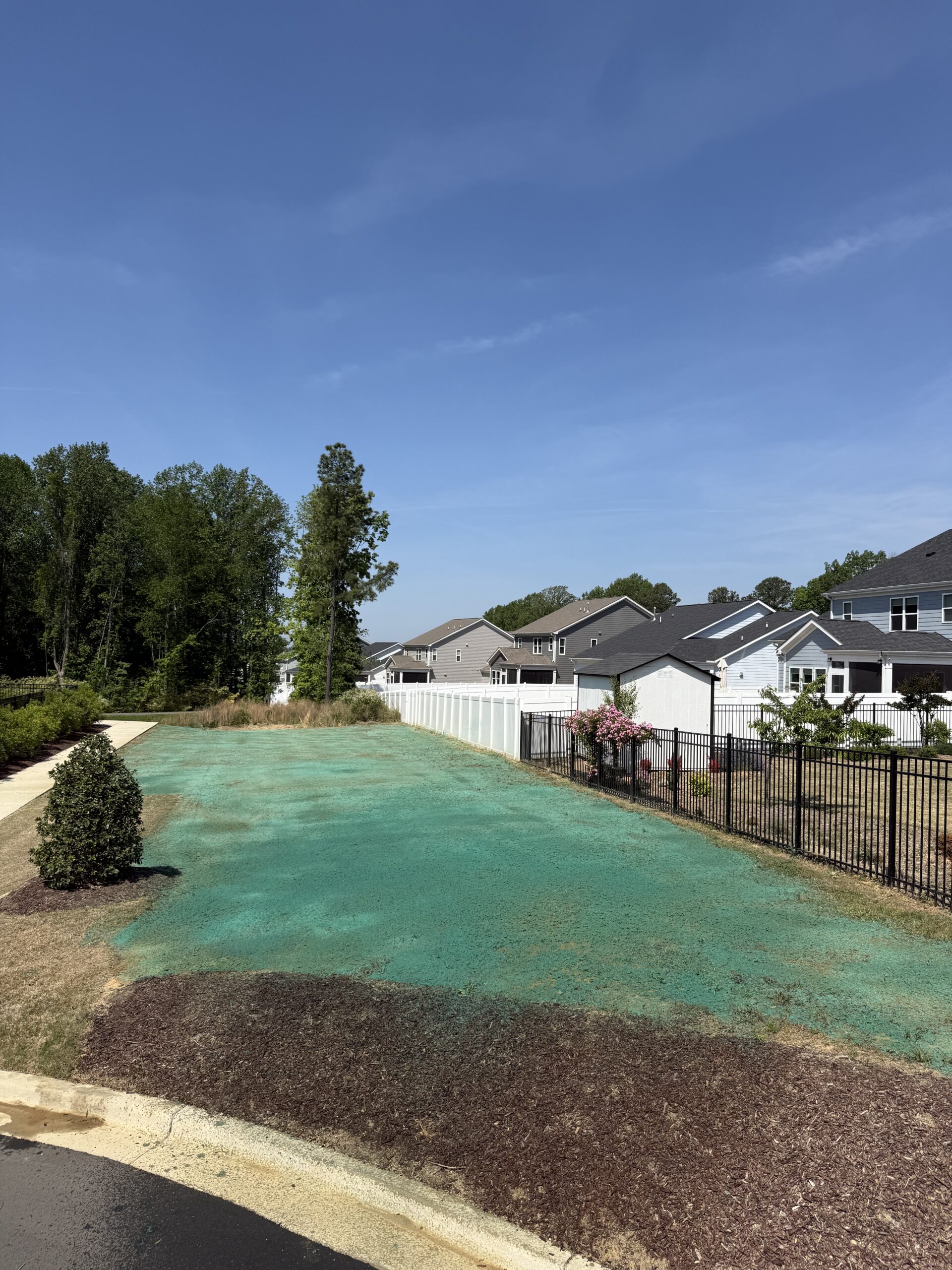
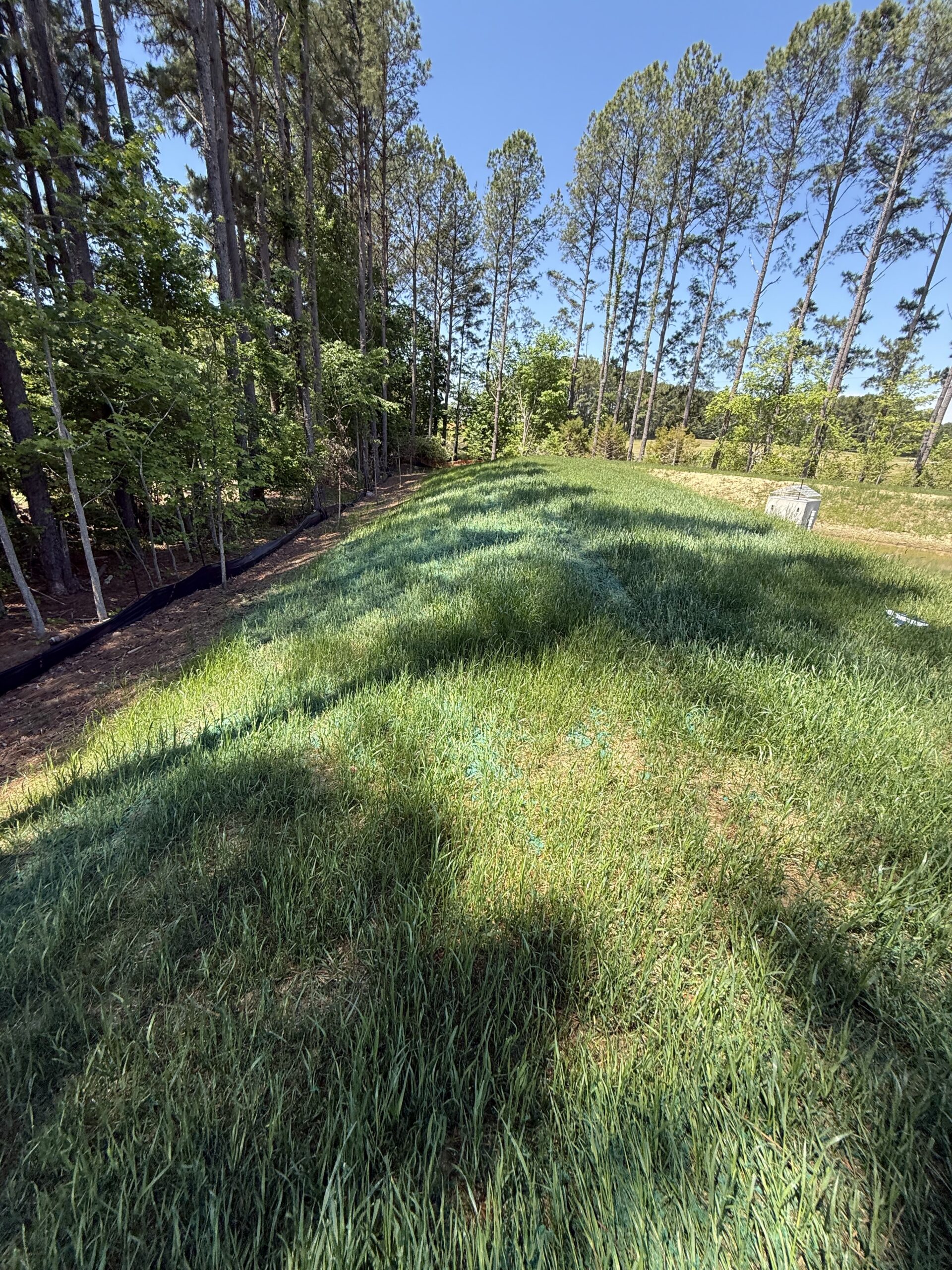
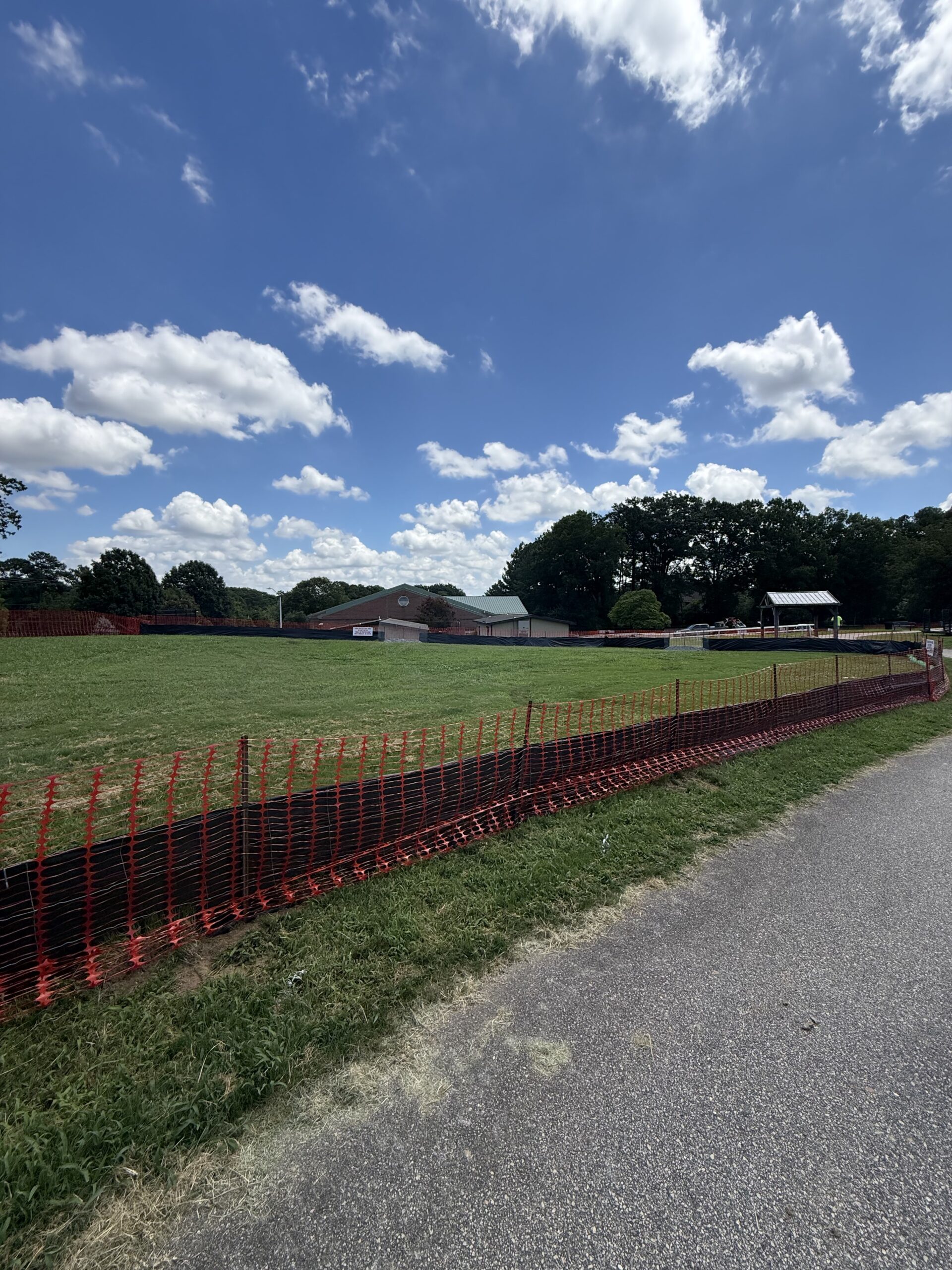
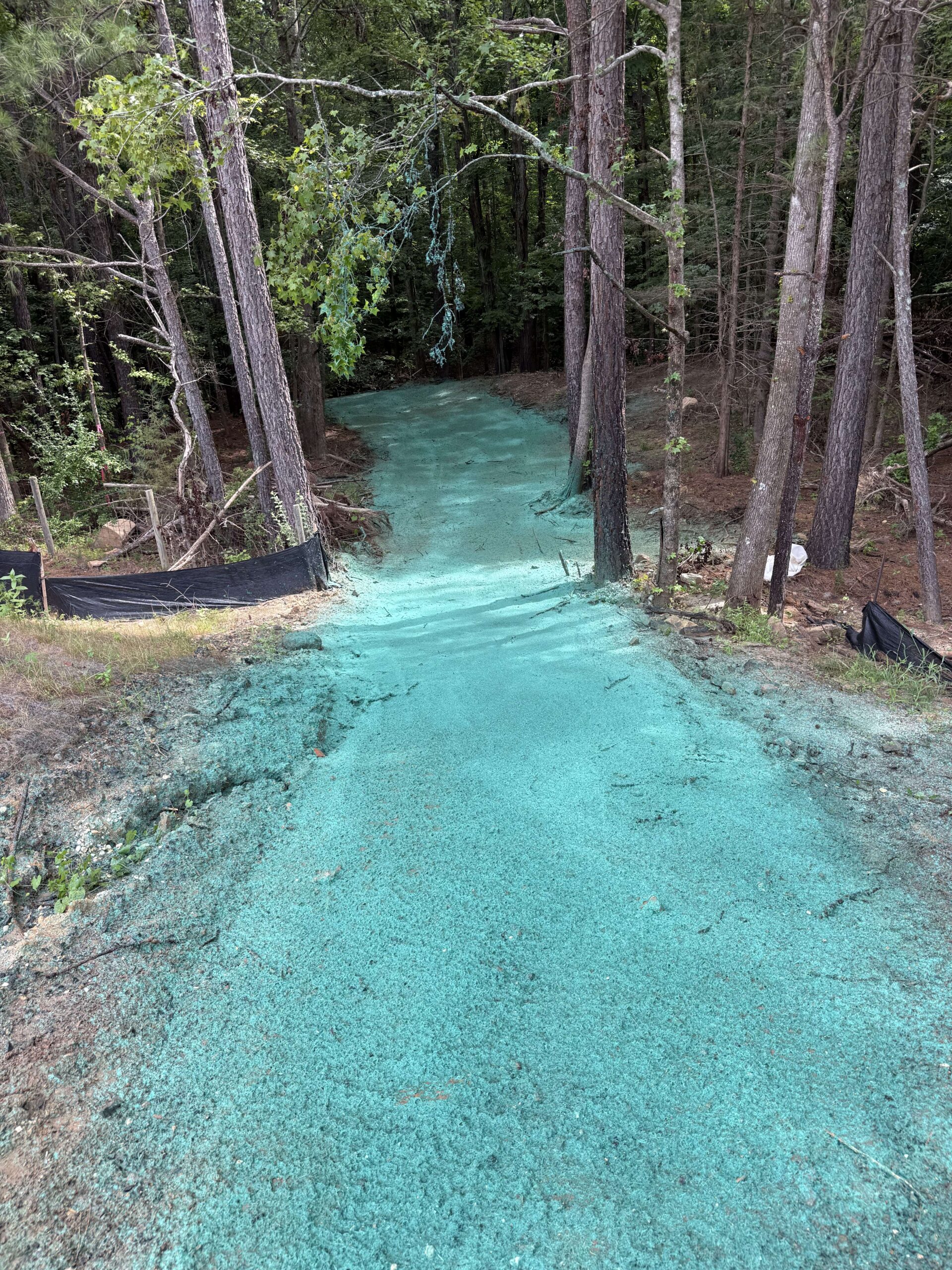
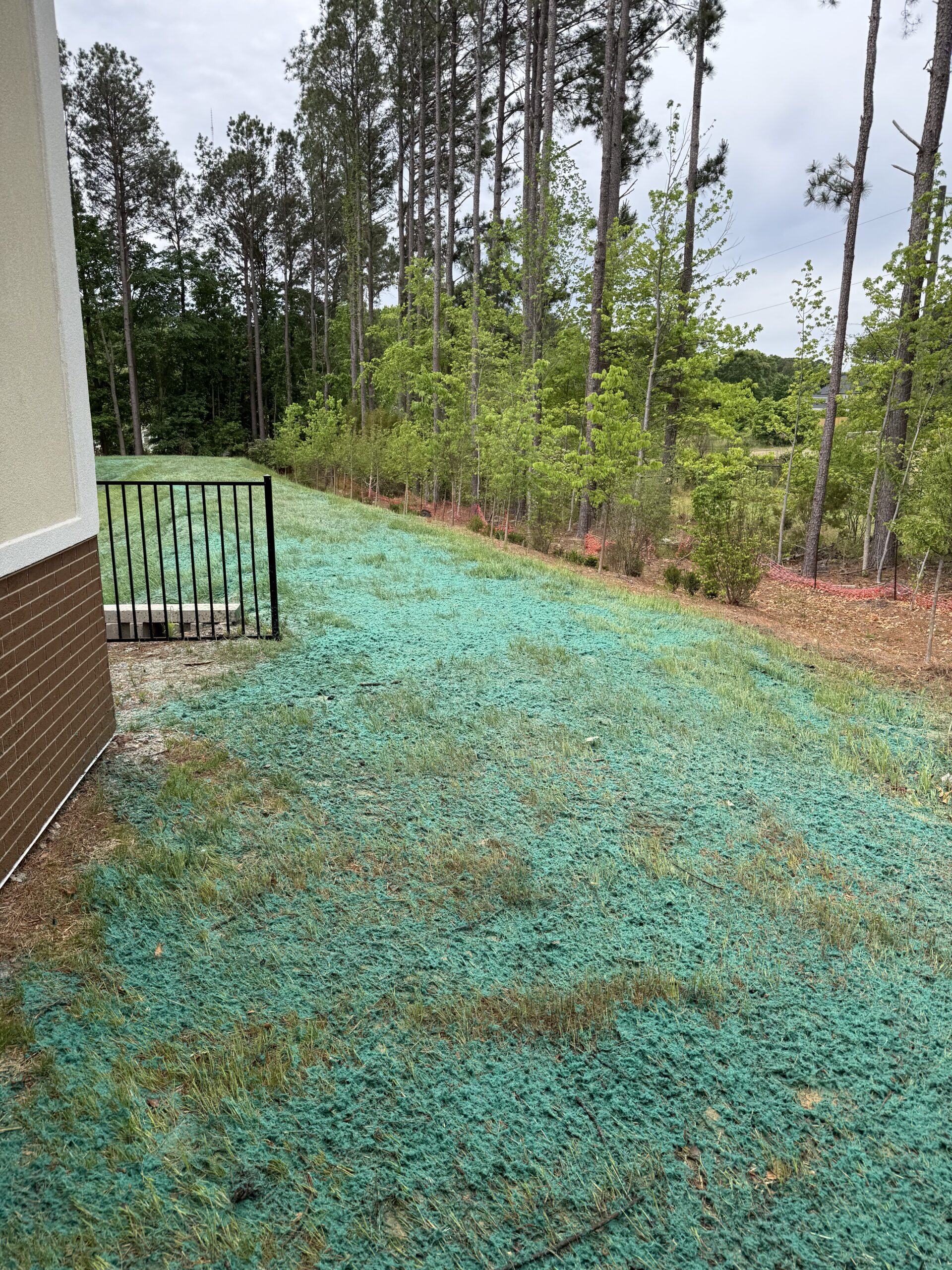
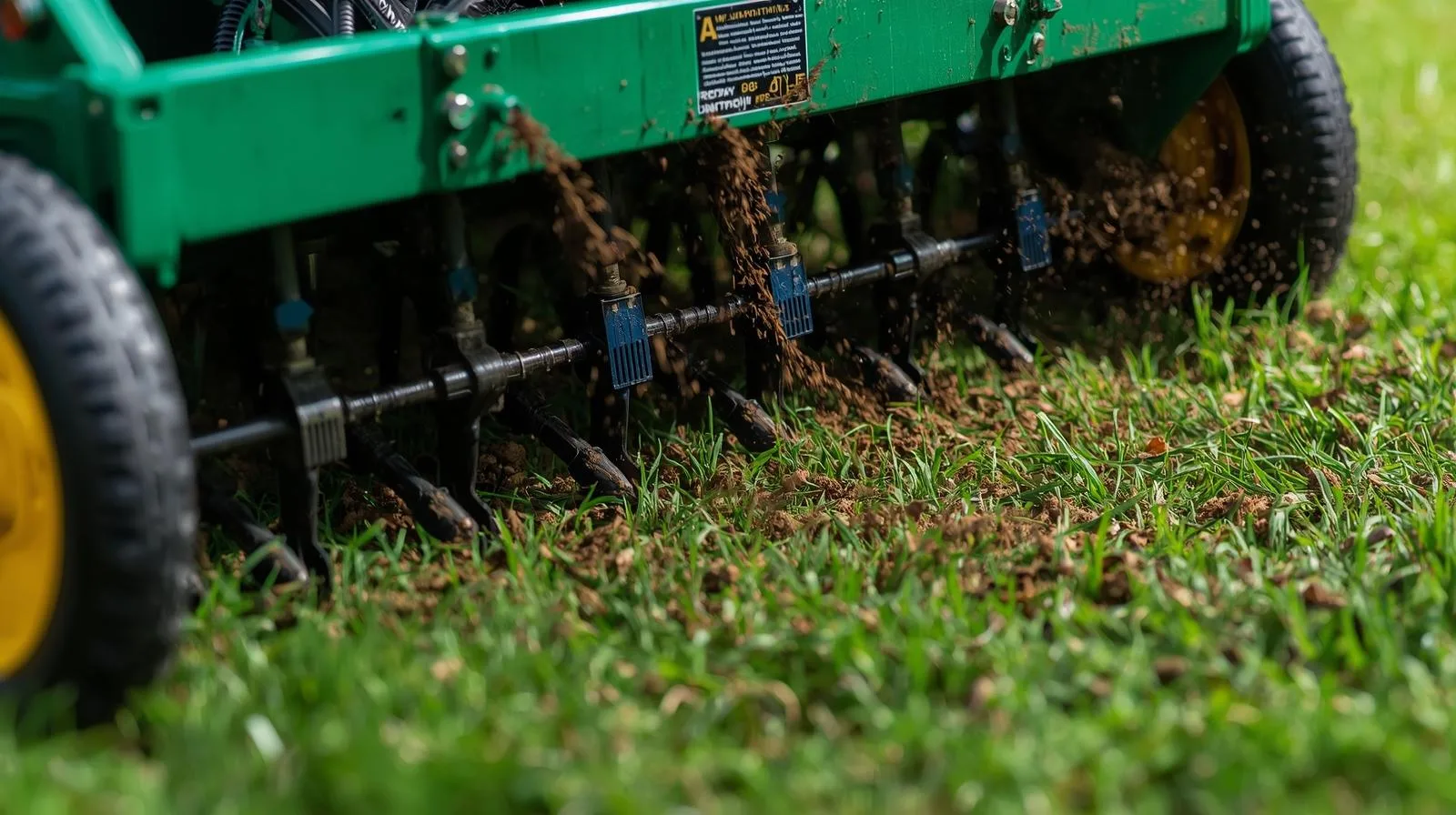
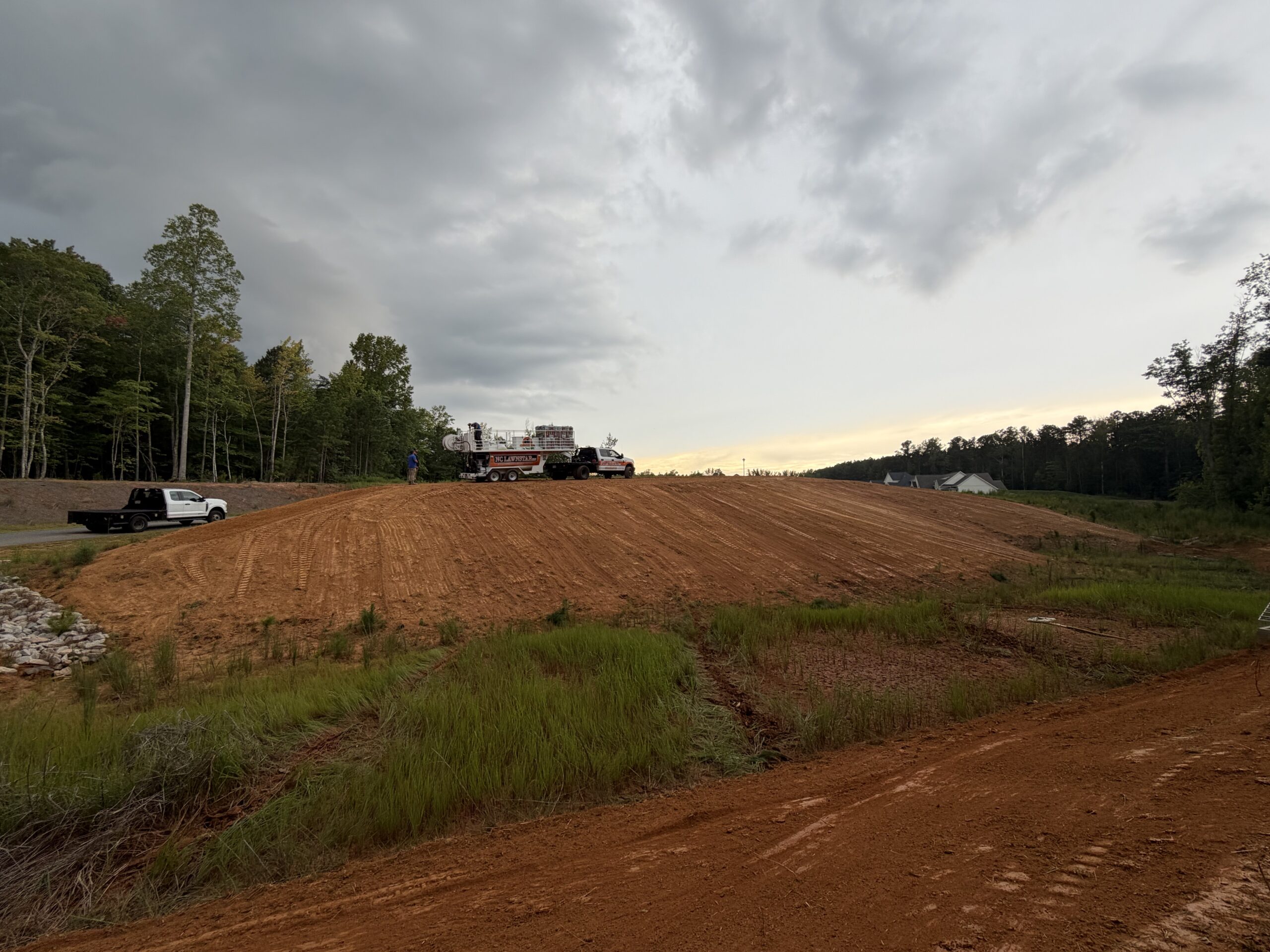
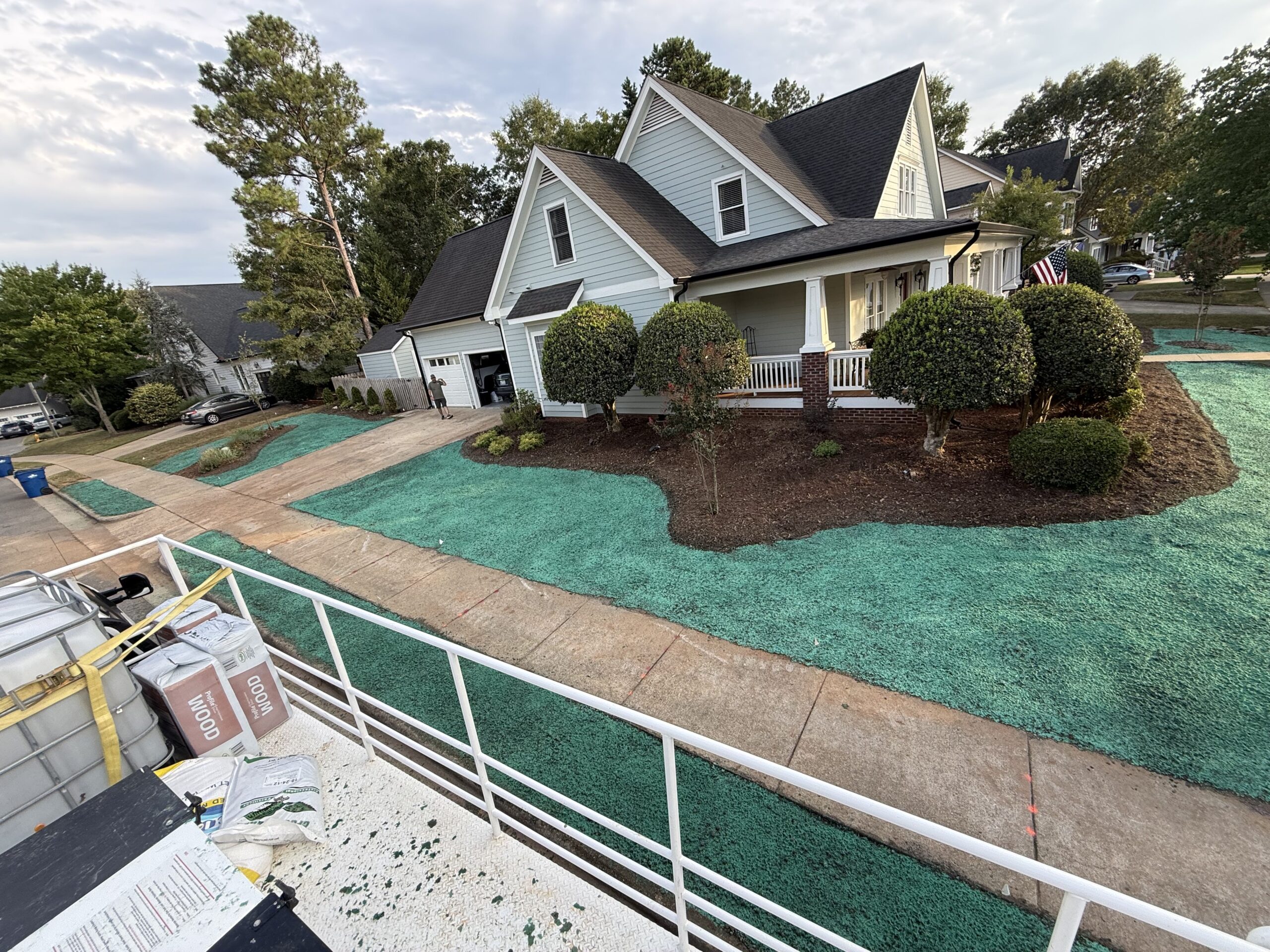
New construction, graded lots, slopes that will not hold, and lawns that never took the first time.
Virginia regulates this at a much smaller size than you think
The number most people have heard is an acre. That is the federal threshold, and it is why erosion control reads as a commercial-site problem. Richmond city regulates at 4,000 square feet.
The fall line runs through your site
Virginia is not one kind of ground, and the right method changes with it.
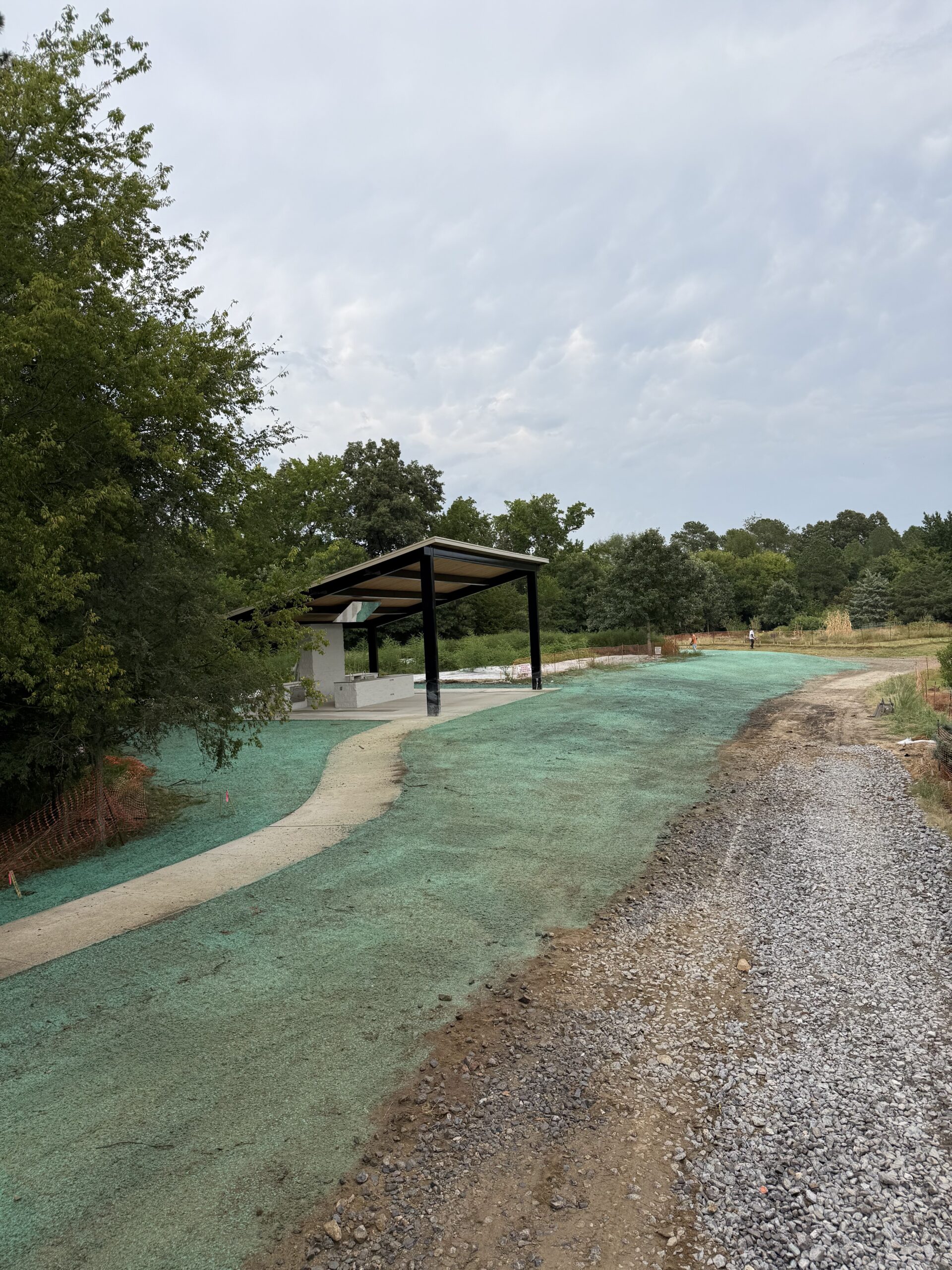
Piedmont clay
West of the fall line. Low infiltration, fast runoff, and fines that stay suspended long enough to pass straight through a silt fence. Tackifier and fast cover do more here than perimeter controls alone.
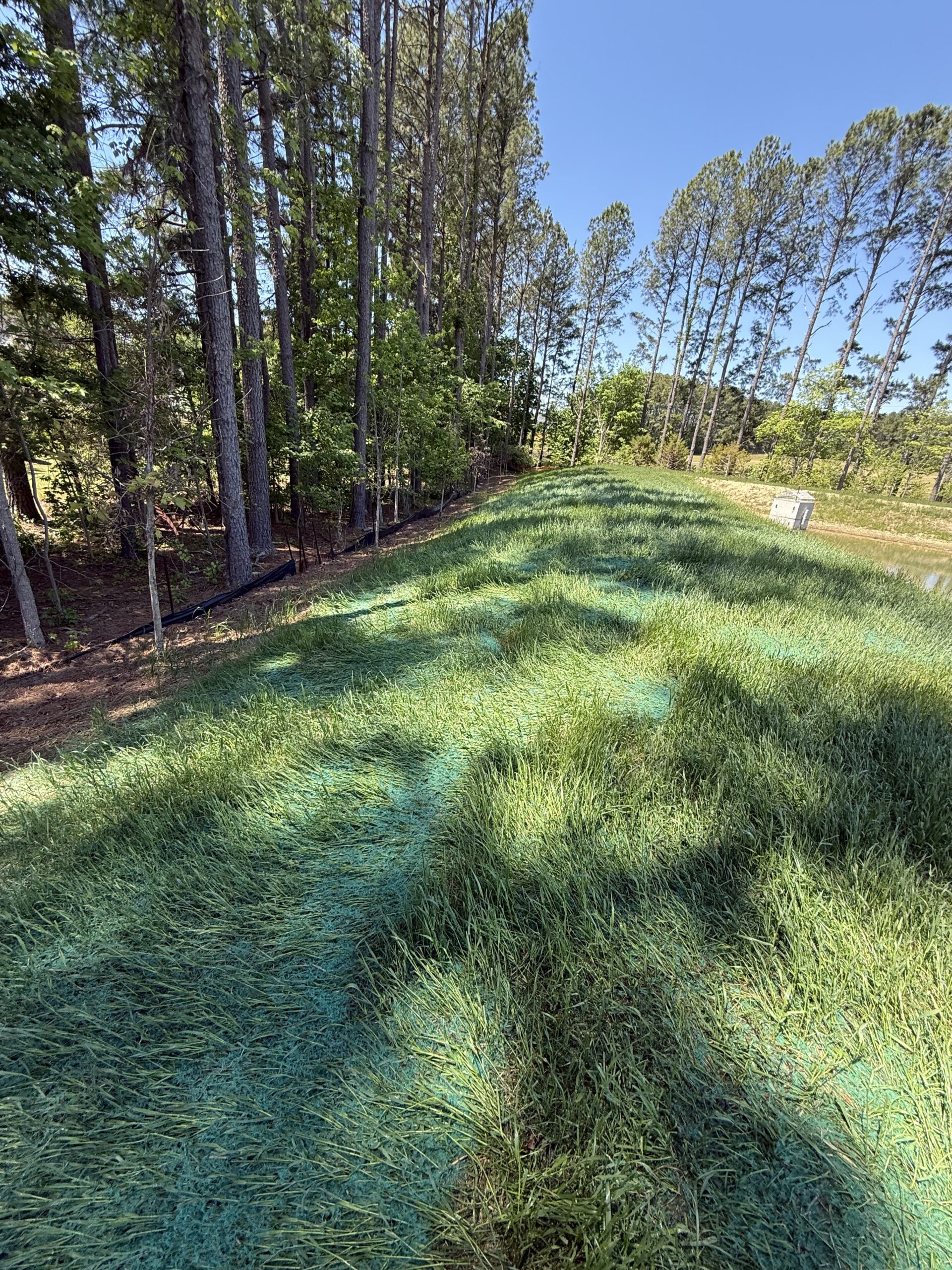
Coastal Plain sand
East of it. High infiltration and gentle grades, so washout is less of a threat — but the ground is droughty and the risk flips to the seed simply drying out. Heavier mulch, and a watering plan.
Stripped subsoil
Grading usually takes the topsoil and leaves compacted clay. Seeding into that without amendment gives thin, patchy establishment — and a failed stand means waiting for the next window.
Three Virginia metros
Richmond is live now. The other two follow, with the same county-by-county detail rather than a name swapped into a template.
Richmond metro
Richmond city and six surrounding counties, each with its own threshold, permit and department.
Northern Virginia
Fairfax, Arlington, Prince William, Stafford and Spotsylvania sit in Tidewater, so the 2,500 sq ft trigger applies where mapped. Loudoun and Fauquier do not — a genuinely different answer a few miles apart.
- Fairfax County
- Loudoun County
- Prince William County
- Arlington & Alexandria
- Stafford & Fauquier
Hampton Roads
Every locality here is Tidewater, so the lower threshold reaches further than anywhere else in the state. It is also Coastal Plain throughout, which changes the method entirely.
- Virginia Beach & Chesapeake
- Norfolk & Portsmouth
- Newport News & Hampton
- Suffolk
- York, James City & Williamsburg
Six reasons people choose it over sod
Same result, different route — and on most Virginia lots this is the one that makes sense.
A fraction of sod
Per square foot, hydroseeding comes in well below sod, and the gap widens the bigger the area. On a full lot that difference is thousands.
One pass, usually one day
Seed, mulch, fertiliser and tackifier go down together. Most residential jobs are sprayed and finished the same day.
Grown in place
Roots develop where they are rather than being cut and relaid, so an established hydroseeded stand generally outlasts sod on the same ground.
Anywhere a hose reaches
Tackifier holds the slurry to gradients where sod creeps and hand seed washes away. Banks, cuts and ditch lines included.
Matched to the site
Blends chosen for your soil, light and slope rather than whatever the sod farm happened to be growing.
We quote every month
There is a best window and the crew will tell you what it is for your site, but there is useful work to do in every month of the year.
Common questions
How much does hydroseeding cost?
Far less than sod, and the gap widens the bigger the area. The exact number moves with size, slope and access, so we quote your site rather than publish a figure that would be wrong on it. The estimate is free and there is no obligation.
Do I need a permit for my garden?
More often than you would expect in Virginia. Richmond city regulates at 4,000 square feet, or 2,500 inside a Chesapeake Bay Preservation Area. Henrico is 2,500. Those are ordinary residential numbers, not commercial ones.
What is a Responsible Land Disturber?
A Virginia certification held by an individual, required on projects where a plan or permit is needed. Because the thresholds here are small it reaches genuinely modest jobs. If a contractor cannot give you a certificate number, they cannot sign your permit application.
When can you start?
Most quotes go out the same day and jobs book within a couple of weeks. There is a best window for permanent seeding and the crew will tell you what it is for your site — but there is worthwhile work in every month, so call now rather than waiting for a date on a calendar.
Hydroseeding or sod?
On most Virginia lots, hydroseeding — it costs three to five times less, it holds on slopes sod creeps off, and the roots develop in place rather than having to knit through a seam. Sod buys you three weeks. See the full comparison.
Do you cover my area?
The Richmond metro now — the cities of Richmond, Colonial Heights, Hopewell and Petersburg, plus Henrico, Chesterfield, Hanover, Goochland, Powhatan and New Kent. Northern Virginia and Hampton Roads are next. Elsewhere in Virginia, call and ask.
Ready when you are
Tell us what the site needs and roughly how big it is. We’ll match you with a crew that works your county and get you a written price.
- Call
- (757) 936-8185
- hydroseedingva@gmail.com
- Where we work
- Richmond city, Henrico, Chesterfield, Hanover, Goochland, Powhatan and New Kent
Get a free estimate
Tell us where the job is and we’ll get you a local quote.
By submitting this form you agree that Hydroseeding VA may share the details you provide with one or more independent local contractors, and that they and we may contact you by phone, text or email about your enquiry — including by automated dialling or prerecorded message. Consent is not a condition of any purchase and you can withdraw it at any time by replying STOP or telling the caller. Message and data rates may apply. See our privacy policy and terms.