Hydroseeding and erosion control in Richmond
- Free estimates
- Local crews
- Erosion control and seeding
- 4 permit trigger
Get a free estimate
Tell us where the job is and we’ll get you a local quote.
By submitting this form you agree that Hydroseeding VA may share the details you provide with one or more independent local contractors, and that they and we may contact you by phone, text or email about your enquiry — including by automated dialling or prerecorded message. Consent is not a condition of any purchase and you can withdraw it at any time by replying STOP or telling the caller. Message and data rates may apply. See our privacy policy and terms.
What triggers a permit in Richmond
Erosion control gets treated as a commercial-site problem because the federal threshold is a full acre. In Virginia it is nothing like that, and in this part of the state it is smaller again.
| Rule | Disturbance that triggers it | Note |
|---|---|---|
| Federal (EPA NPDES) | 1 acre | The number most people have heard |
| Virginia, general | 10,000 sq ft | Four times stricter than federal |
| Virginia, inside a CBPA | 2,500 sq ft | Tidewater localities only, and only inside a mapped area |
| Richmond | 4,000 sq ft outside a CBPA, 2,500 sq ft inside one | What actually applies here |
What's different about Richmond
Three things worth knowing before you get quotes.
The 4,000 sq ft line catches ordinary jobs
Most people assume erosion control is a commercial-site problem because the federal threshold is a full acre. In the city it is 4,000 square feet, and 2,500 inside a mapped Chesapeake Bay Preservation Area. A 60 by 70 foot regrade is over the line.
Your surety is released at 75% cover
The city requires a performance surety on every land-disturbing project and releases it once 75 percent living perennial vegetation is established. That ties a builder's money directly to whether the seeding takes — which is the whole argument for doing the stabilisation properly the first time.
Fall line soil, two different problems
West of the fall line you are working red Piedmont clay: low infiltration, fast runoff, fines that stay suspended and walk straight through a silt fence. East of it the ground turns sandy and the problem flips to droughtiness. Same city, two different seedbeds.
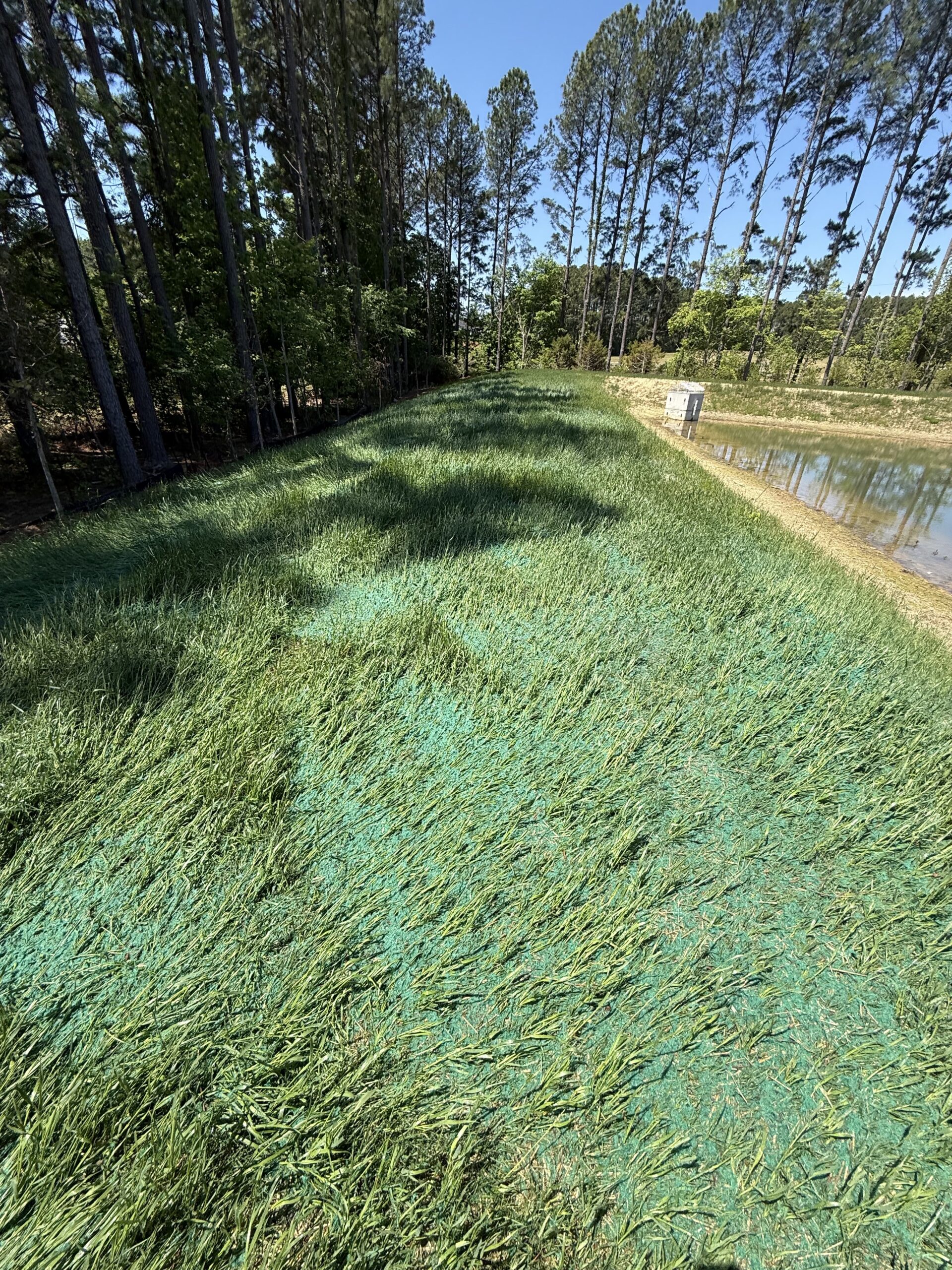
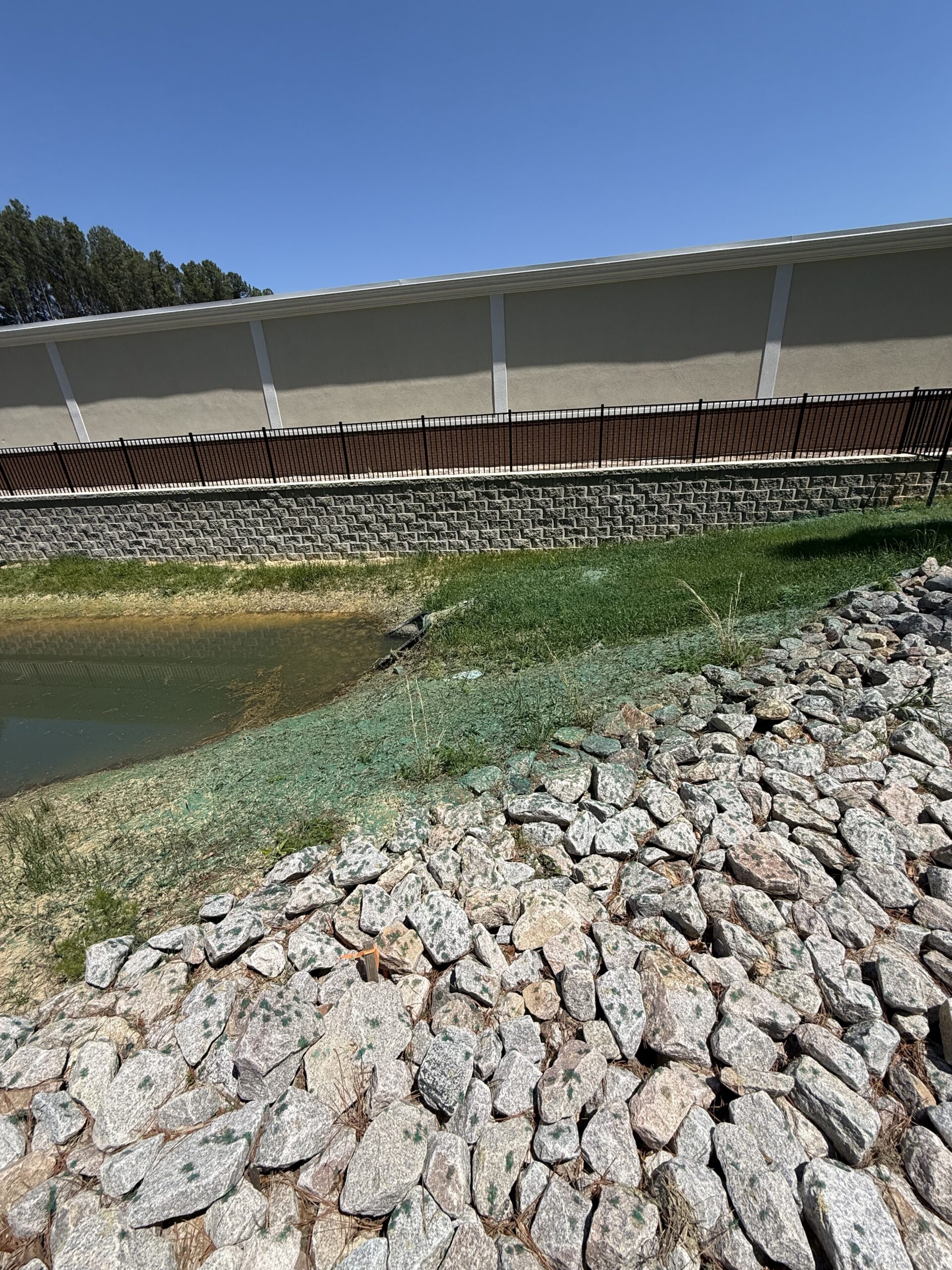
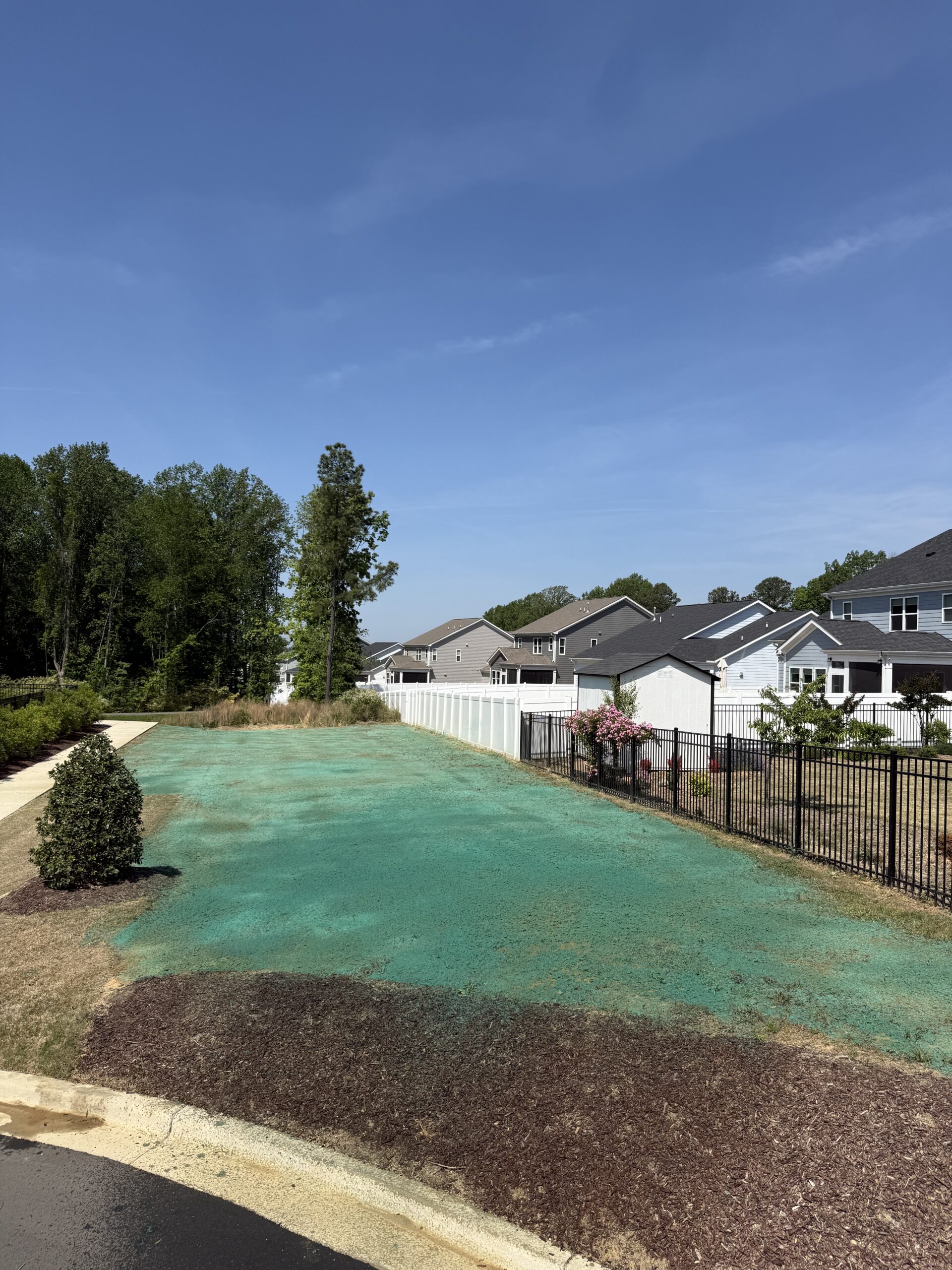
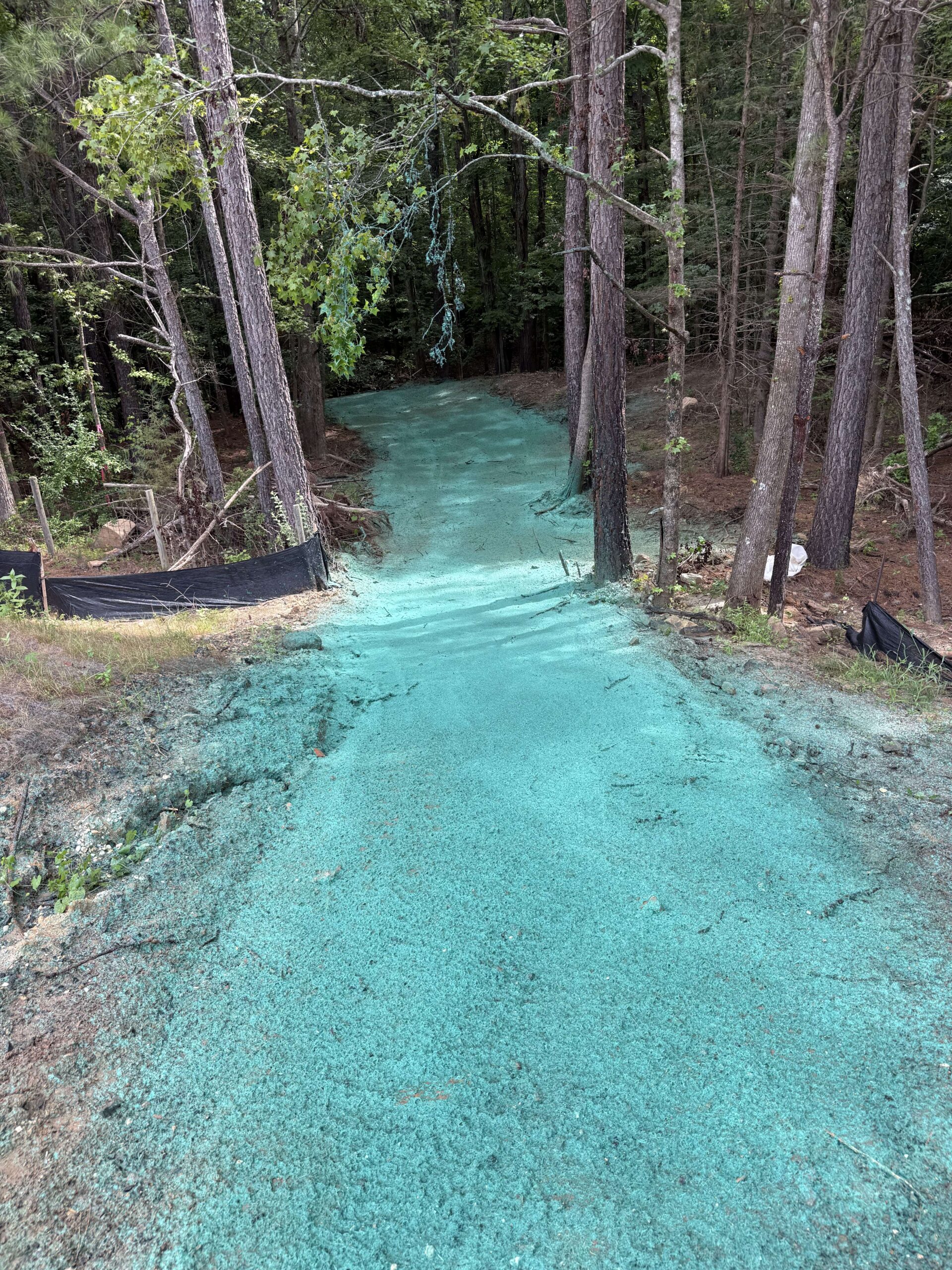
Recent work in Richmond
Builder lots stripped to clay, banks that keep sliding, and lawns that came in patchy the first time.
What the 4,000 square foot rule means on a city lot
City lots are small, and that is exactly why the threshold bites. Four thousand square feet is roughly 60 by 65 feet — a back garden regrade, a driveway replacement with the verges made good, or a pool with its surround. People assume they are nowhere near a permit and find out otherwise when an inspector drives past.
The surety makes it sharper still. Richmond holds a performance bond on land-disturbing work and releases it at 75 percent living perennial vegetation. So the stabilisation is not the last item on the job, it is the thing standing between a builder and their money. We have seen more than one site where a thin stand held up a release for a whole season because the seeding was done in July on stripped clay with no amendment.
The fall line runs through the city, which means two different jobs inside one set of boundaries. West and north you are on Piedmont clay: slick when wet, hard when dry, and the runoff carries fines that a silt fence will not catch. East toward the river bottoms the ground turns sandier and the failure mode flips to the seed drying out before it germinates. Same city, same week, different mulch rates.
Bare ground to established lawn
Drag the handle. Stripped Piedmont clay on the left, one growing season later on the right.
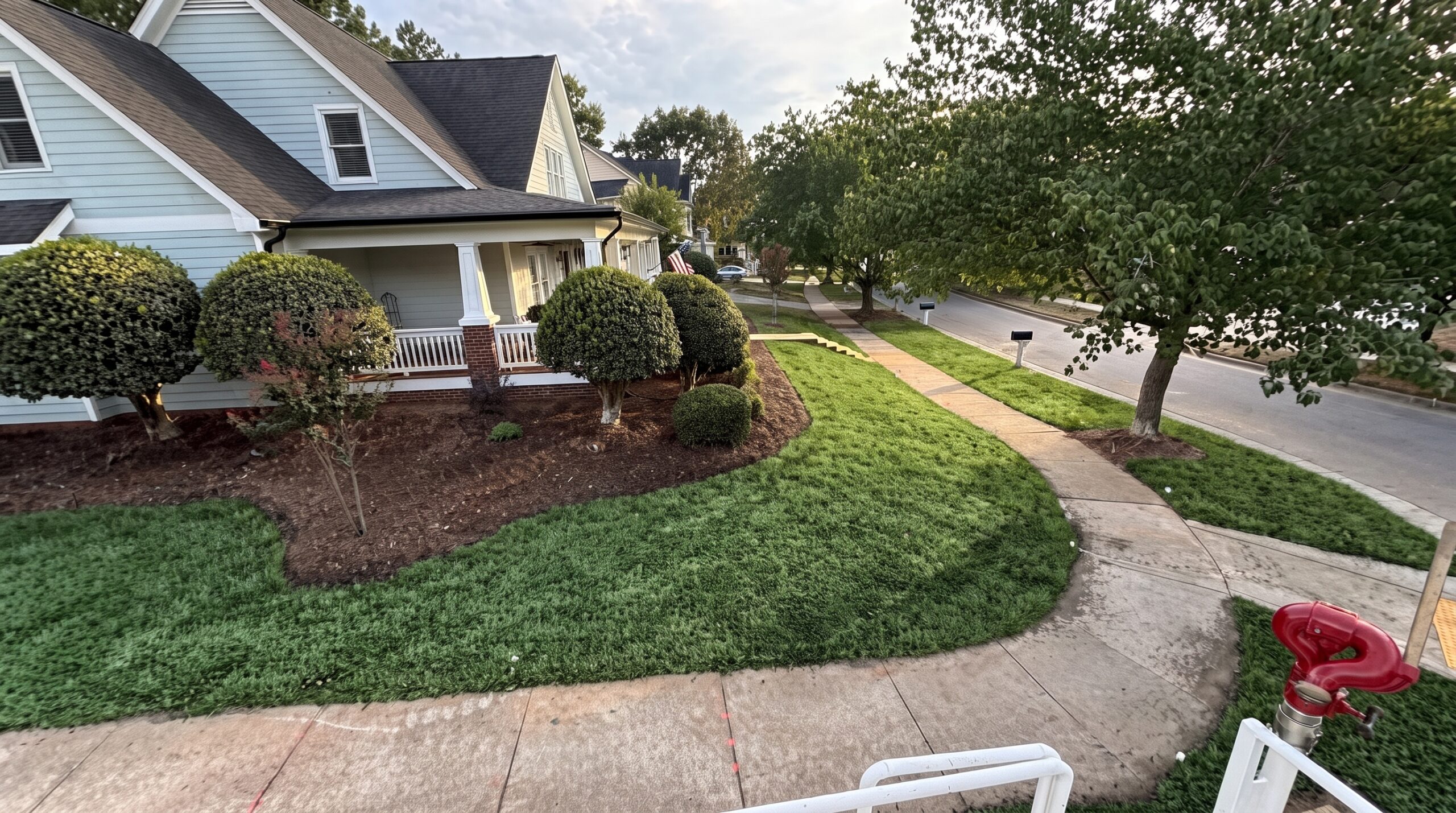
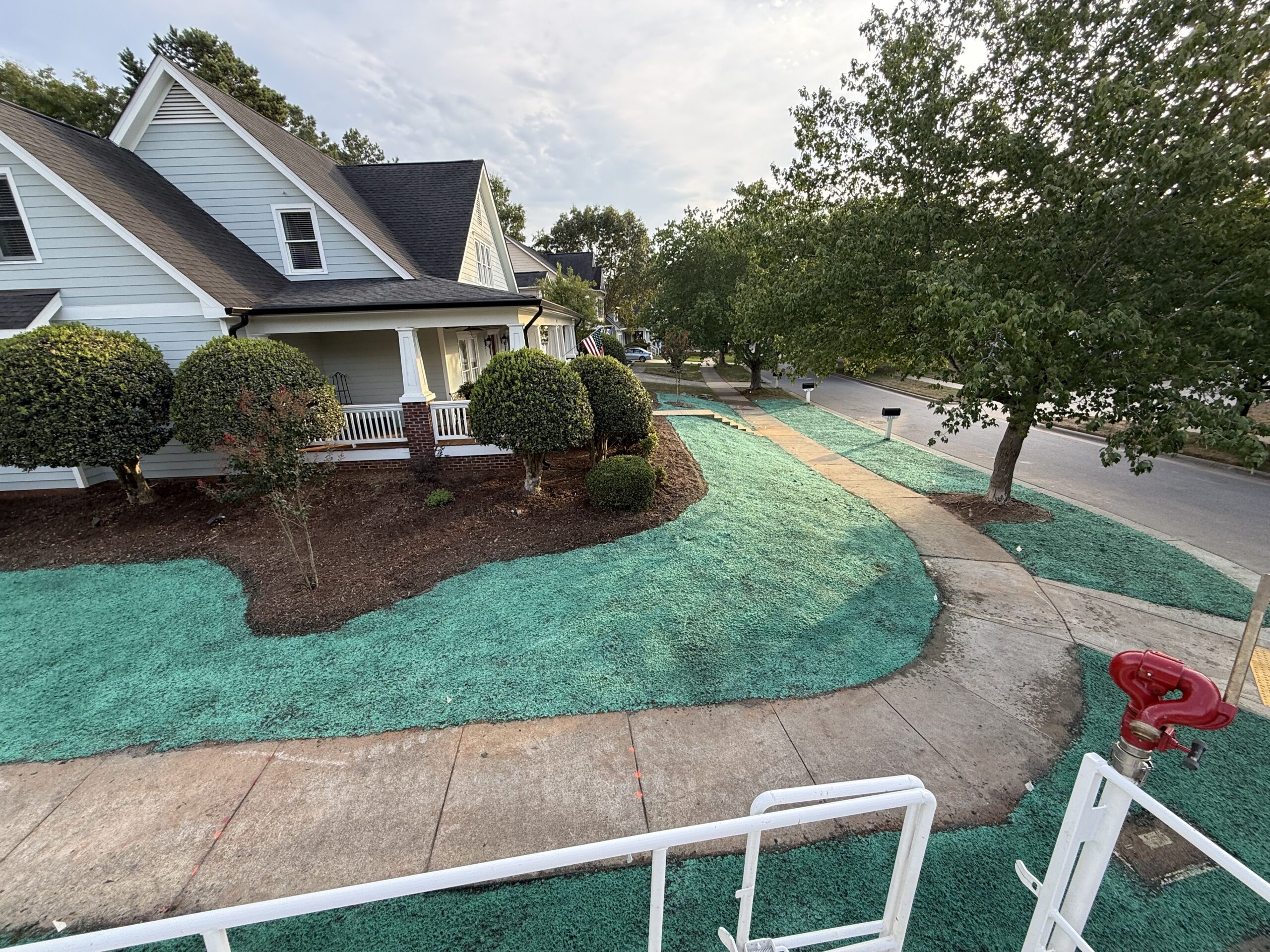 BeforeAfter — one season
Hydroseeding vs sod vs hand seeding
On clay the difference is whether the seed stays where you put it.
| Hydroseeding | Sod | Hand seeding | |
|---|---|---|---|
| Cost per sq ft | $0.20 – $0.45 | 3 to 5 times higher | Cheapest up front, most likely to need doing twice |
| Holding on clay | Tackifier grips the slurry to a slick, low-infiltration surface | Rolls creep on clay before roots take | Seed washes to the bottom of the slope |
| Slopes and banks | Sprays anywhere a hose reaches | Slips before rooting; needs pinning | Washes out in the first heavy rain |
| Stripped subsoil | Amendment goes in as part of the same operation | Sits like a rug on unprepared clay | Rarely establishes at all |
| Grass choice | Any blend, matched to soil and light | Whatever the farm grew | Any blend |
| Usable lawn in | One growing season | 2–3 weeks | One to two seasons, patchy |
From tank to turf
Spray day in Richmond, the fortnight after, and the result a season on.
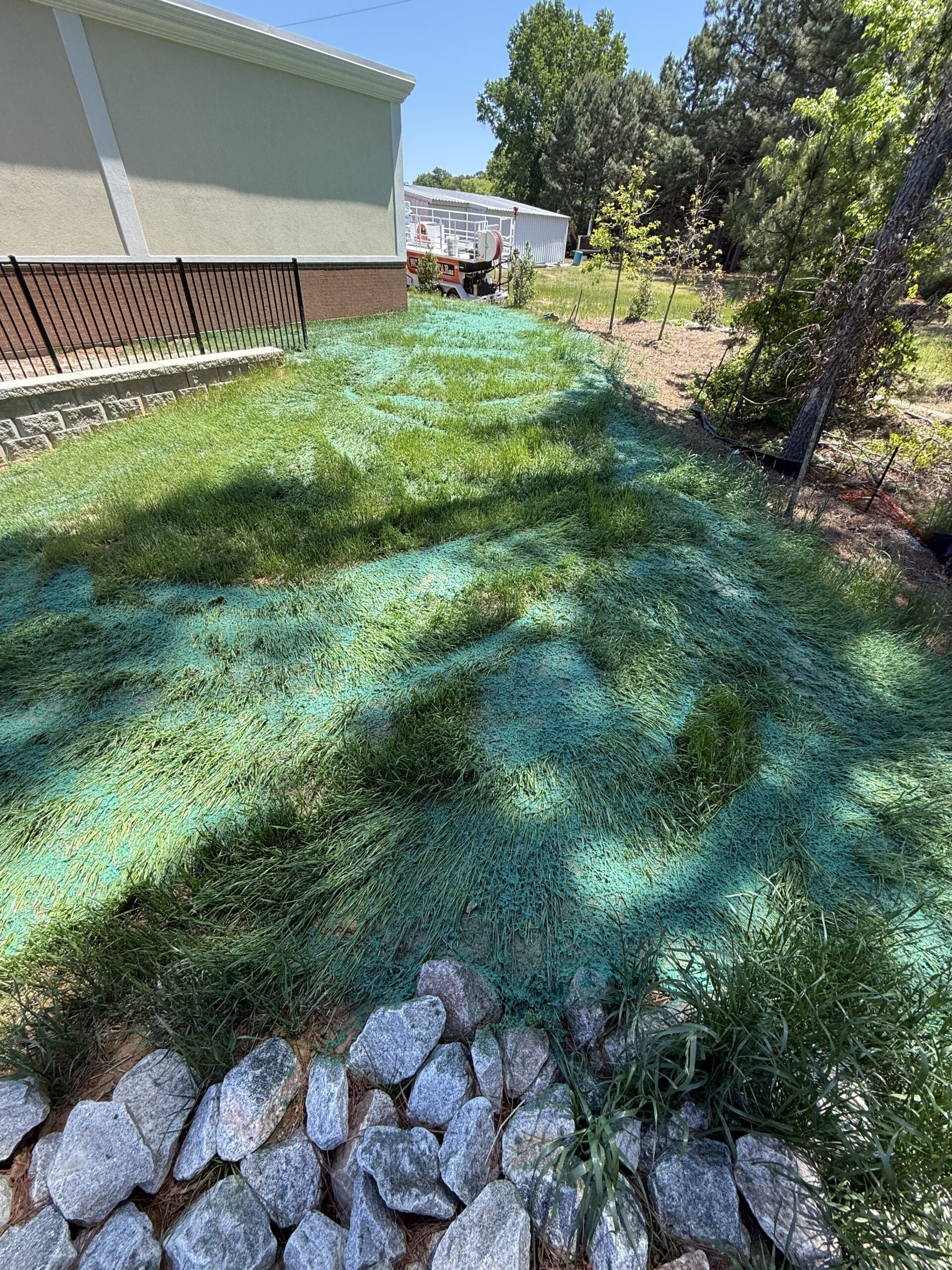
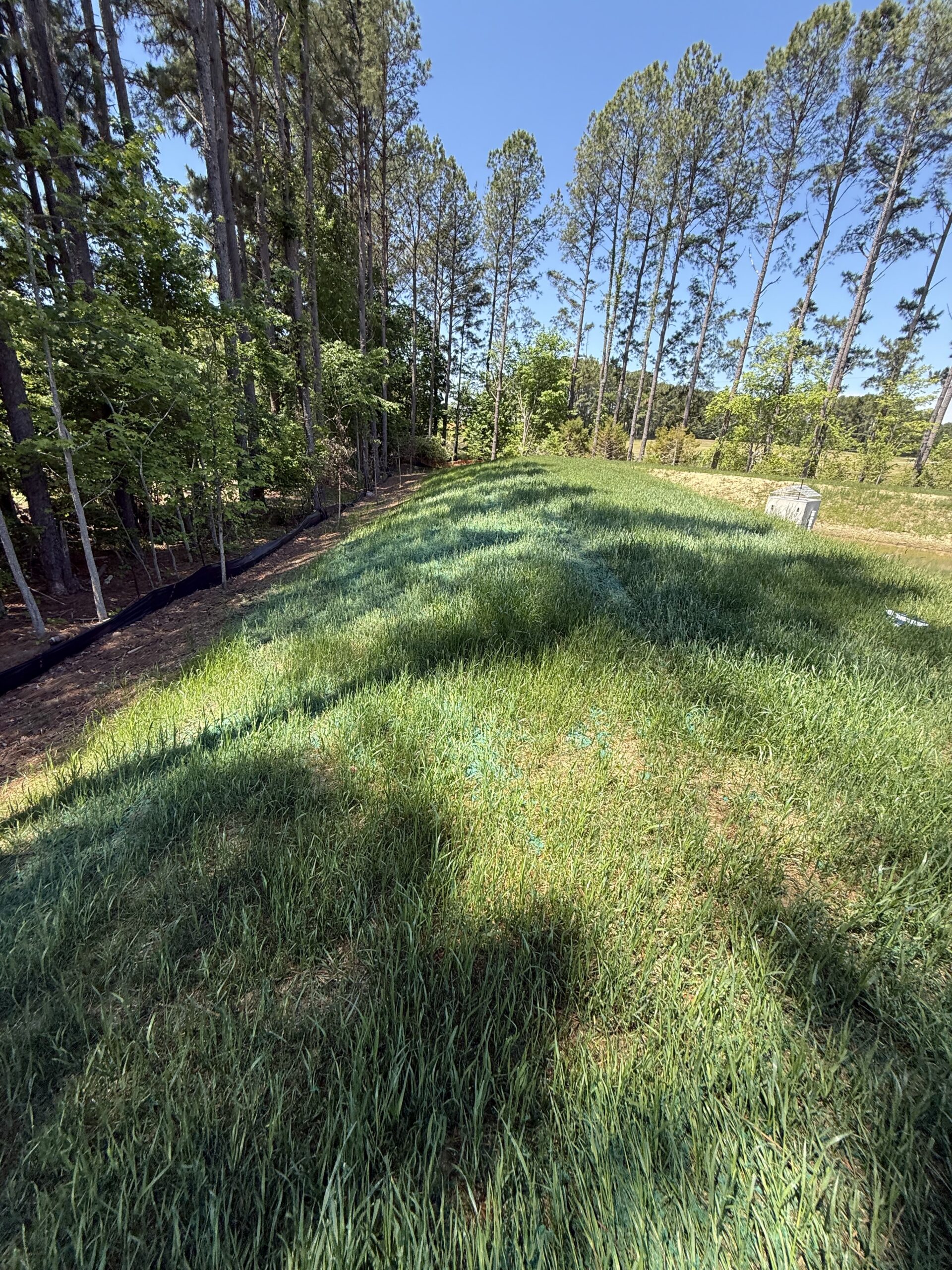
The paperwork in Richmond
| Item | Detail |
|---|---|
| Permit | RESMP permit (Richmond Erosion & Stormwater Management Program) |
| Administered by | Department of Public Utilities, Water Resources Division |
| Chesapeake Bay Preservation Area | Yes — mapped areas only |
| Ground | Straddles the fall line — Piedmont clay to the west, Coastal Plain sand to the east |
| RPA buffer | 100 ft vegetated buffer where mapped |
Work we cover in Richmond
Clay ground changes what works. Tell us which you need and we’ll get you a local price.
Richmond questions
Why is Richmond's threshold lower than the state's?
Virginia sets a floor and lets localities go below it. The city took that option and adopted 4,000 square feet outside Chesapeake Bay Preservation Areas, against the state’s 10,000. Inside a mapped CBPA it drops again to 2,500. Almost nobody outside the permit office knows this, which is how people end up with a stop-work notice on a driveway job.
What is the 75 percent vegetation release?
The city holds a performance surety on land-disturbing projects and releases it once 75 percent living perennial vegetation is established. In practice that means your money stays with the city until the seeding has genuinely taken — patchy establishment is not just a cosmetic problem, it is a cash-flow one.
Does the fall line really change what I need?
Yes, and Richmond sits right on it. West of the line you are on red Piedmont clay where the problem is runoff and suspended fines. East of it the ground turns sandy and the problem is the seed drying out. Same city, different mulch rates, different controls.
What is a Responsible Land Disturber and do I need one?
It is a Virginia certification held by an individual, not a company, required on projects where a plan or permit is needed. Because the thresholds here are small, that reaches genuinely modest residential jobs. If a contractor cannot give you a certificate number, they cannot sign your permit application.
Hydroseeding near you in Richmond
Places we quote in Richmond. If your address is inside the city, we cover it.
- The Fan
- Museum District
- Church Hill
- Northside
- Southside
- Scott's Addition
- Carytown
- Shockoe
- Manchester
- West End
- Forest Hill
- Byrd Park
- Ginter Park
- Oregon Hill
- Jackson Ward
- Bellevue
Richmond on the map
Richmond sits west of the fall line, which is why the method here differs from the other side of the metro.
Get a free Richmond estimate
Tell us the address and roughly how big the job is. You’ll have a real price from a local crew, usually the same day. No obligation.
Ready when you are
Tell us what the site needs and roughly how big it is. We’ll match you with a crew that works your county and get you a written price.
- Call
- (757) 936-8185
- hydroseedingva@gmail.com
- Where we work
- Richmond city, Henrico, Chesterfield, Hanover, Goochland, Powhatan and New Kent
Get a free estimate
Tell us where the job is and we’ll get you a local quote.
By submitting this form you agree that Hydroseeding VA may share the details you provide with one or more independent local contractors, and that they and we may contact you by phone, text or email about your enquiry — including by automated dialling or prerecorded message. Consent is not a condition of any purchase and you can withdraw it at any time by replying STOP or telling the caller. Message and data rates may apply. See our privacy policy and terms.