Drainage fields
- French drains and swales
- Downspout and surface water
- Designed for the soil
- Free estimates
Get a free estimate
Tell us where the job is and we’ll get you a local quote.
By submitting this form you agree that Hydroseeding VA may share the details you provide with one or more independent local contractors, and that they and we may contact you by phone, text or email about your enquiry — including by automated dialling or prerecorded message. Consent is not a condition of any purchase and you can withdraw it at any time by replying STOP or telling the caller. Message and data rates may apply. See our privacy policy and terms.
The fall line runs through your drainage problem
Richmond sits on the boundary between two completely different kinds of ground, and the right drainage answer flips depending on which side you are on.
West of the line — Piedmont clay. Goochland, Powhatan, western Henrico and Chesterfield. Infiltration is low, so a given rainfall produces more runoff and it arrives faster. Water concentrates into rills on slopes that sandier soil would shrug off. The job here is interception and controlled conveyance: get it off the slope before it cuts.
East of the line — Coastal Plain. New Kent, eastern Henrico and Hanover. Deep sandy sediments, high infiltration, gentle grades. Surface erosion is less of a threat, but a higher water table limits what you can do below ground and the soil is droughty enough that seeding struggles for the opposite reason.
A contractor who offers the same French drain on both sides of the James has not looked at your soil.
What usually works
Most residential water problems are solved with two or three of these together, not with one heroic installation.
Downspout extensions
Unglamorous and frequently the entire fix. A downspout discharging at the foundation on clay is a wet basement and an eroding bed in one.
Swales
A shallow shaped channel, vegetated, carrying surface water where you want it. Cheaper than pipe and stabilises itself once the cover establishes.
French drains
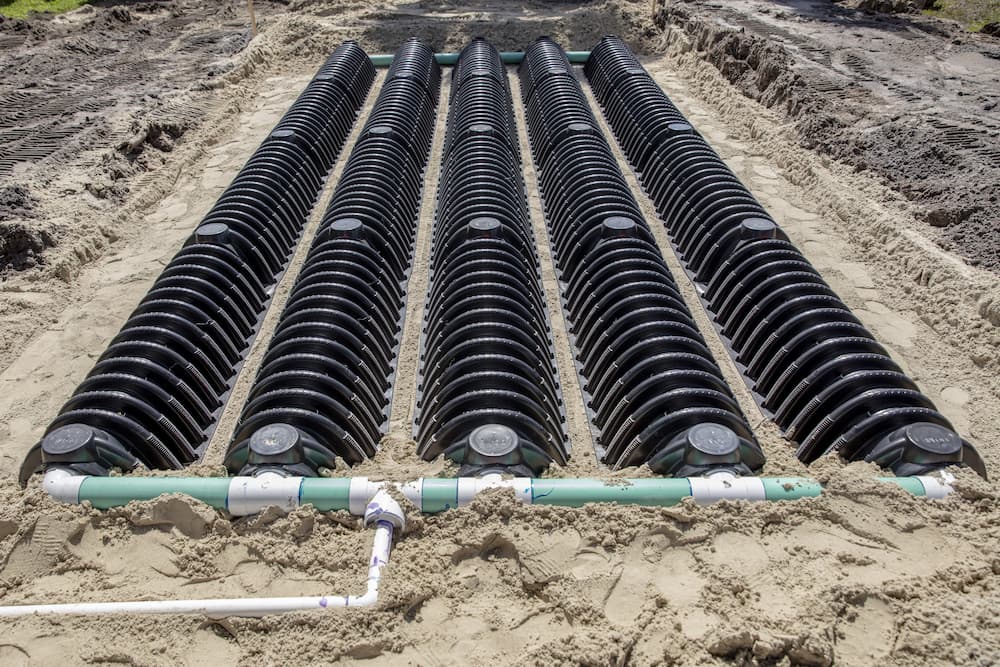
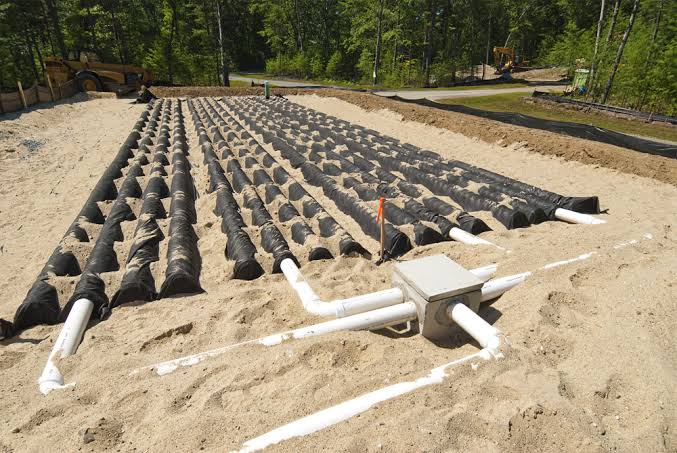
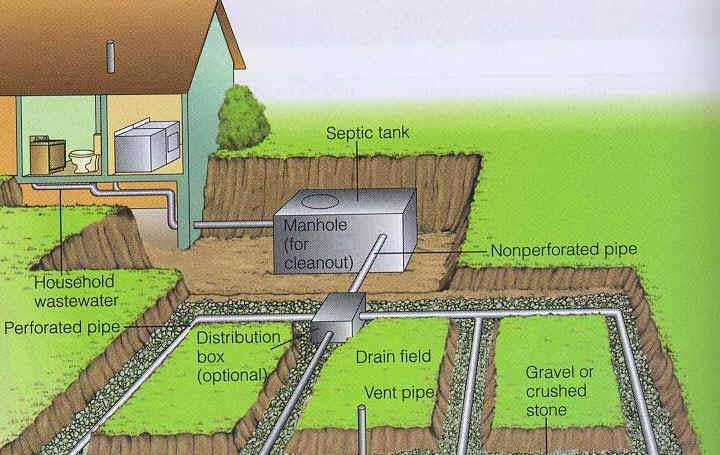
Perforated pipe in stone, wrapped. Genuinely useful where there is somewhere to take the water. Useless where the outlet is higher than the problem.
Dry wells and infiltration
Good on the sandy side of the metro where the ground will actually take water. Marginal on clay, and a waste of money where the water table is close.
Regrading
Sometimes the water is simply being sent the wrong way. Fixing the grade is cheaper than engineering around a slope that runs toward the house.
Cover and matting
A stabilised, vegetated surface absorbs and slows water. The cheapest drainage improvement on most sites is a lawn that actually took.
Water work is still land disturbance
Trenching for drainage disturbs ground, and the thresholds do not care that your intention was to fix erosion rather than cause it.
It matters more near water. Inside a mapped Resource Protection Area the buffer is 100 feet of vegetation, and development encroachment cannot extend into the seaward 50 feet of it. Chesterfield’s RPAs alone follow the James and Appomattox, Falling Creek, Swift Creek, Lake Chesdin and over 850 miles of perennial streams.
If your drainage problem ends at a creek, check the map before you dig.
Start to finish
No surprises in the middle.
Find out where the water actually comes from
Roof, neighbouring ground, road, or a spring. People usually solve the symptom they can see rather than the source, and then wonder why it comes back.
Work out where it can go
This is the constraint that decides everything. Drainage needs an outlet, and no amount of pipe helps if there is nowhere lower to take it to.
Check what is regulated
Whether the work crosses your locality's threshold, and whether it is near a Resource Protection Area. Cheaper to know first.
Install
Usually a combination. Rarely one thing.
Stabilise what you disturbed
Trenching leaves bare ground on a site that already had a water problem. Seeding it is part of the job.
Recent work
Across the Richmond metro.
Common questions
Water pools in my yard after every storm. Is that erosion?
Not by itself — ponding is a drainage problem, not necessarily an erosion one. But they usually travel together, because the water that ponds got there by moving across something, and it took soil with it.
Will a French drain fix it?
Only if there is somewhere for the water to go. On flat Coastal Plain ground with a high water table, a French drain can just become a trench full of water. The outlet decides whether it works, not the pipe.
Can I do drainage work near a creek?
Carefully, and check first. If the creek is a perennial stream you may be inside a Resource Protection Area with a 100-foot buffer, and encroachment into the seaward 50 feet is not permitted. That is a conversation with the locality before it is a conversation with a contractor.
Does drainage work need a permit?
It can. The trigger is how much ground you disturb, not what you are building. Richmond city regulates at 4,000 square feet outside Chesapeake Bay areas; Henrico at 2,500. Trenching across a garden adds up faster than people expect.
Is it cheaper to just regrade?
Sometimes, genuinely. If the ground is sending water at the house, fixing the grade solves the cause rather than managing the effect. We will tell you when that is the better buy.
Get a quote
Tell us the site, the size and roughly when. We’ll come back with a local price.
Ready when you are
Tell us what the site needs and roughly how big it is. We’ll match you with a crew that works your county and get you a written price.
- Call
- (757) 936-8185
- hydroseedingva@gmail.com
- Where we work
- Richmond city, Henrico, Chesterfield, Hanover, Goochland, Powhatan and New Kent
Get a free estimate
Tell us where the job is and we’ll get you a local quote.
By submitting this form you agree that Hydroseeding VA may share the details you provide with one or more independent local contractors, and that they and we may contact you by phone, text or email about your enquiry — including by automated dialling or prerecorded message. Consent is not a condition of any purchase and you can withdraw it at any time by replying STOP or telling the caller. Message and data rates may apply. See our privacy policy and terms.